
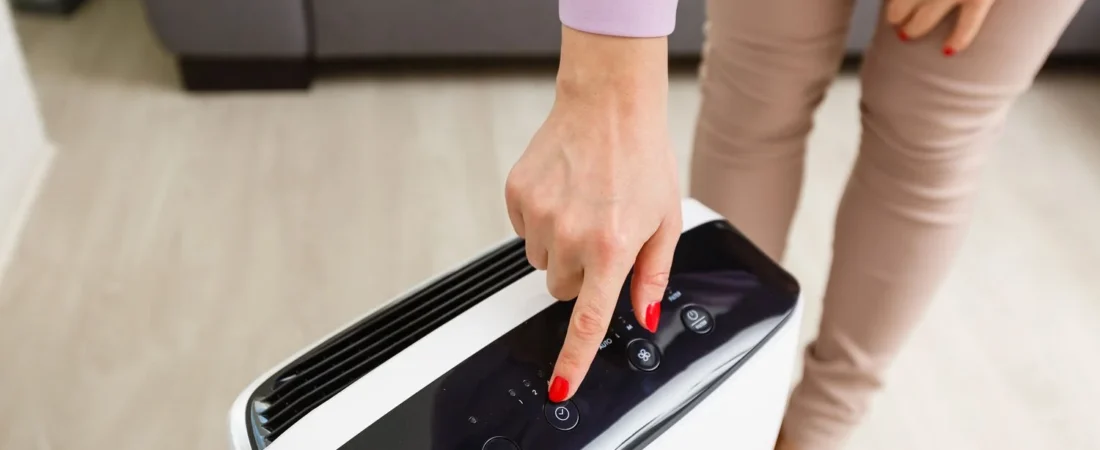
You’ve just purchased a dehumidifier, plugged it in, and set it to 45% relative humidity. The hygrometer currently reads 72%. You stand there watching, expecting the numbers to drop immediately—but after 30 minutes, humidity has barely budged from 71%. Frustration sets in. Is the dehumidifier broken? Should you buy a bigger one? Or is something fundamentally wrong with your expectations? The answer is simpler than you think: dehumidification isn’t instantaneous. The moisture accumulated over weeks or months of high humidity doesn’t disappear in minutes. Understanding how long it takes to lower indoor humidity requires grasping the physics of moisture removal, the capacity limitations of equipment, and the realistic timelines backed by testing data showing that properly sized dehumidifiers reduce humidity in small rooms (200 sq ft) within 4-6 hours, medium rooms (500 sq ft) within 8-12 hours, and whole homes within 3-7 days when no specific damp problems exist.
Research from controlled testing in sealed 50 square foot chambers reveals that high-capacity dehumidifiers (70+ pint) reduce humidity from 90% to 40% in approximately 12-15 minutes in this tiny space, while smaller units (30 pint) require 20-30 minutes for the same reduction. Scale these results to actual room sizes—a bedroom at 150 square feet contains three times the air volume, meaning even best-case scenarios require hours, not minutes. For entire homes battling sustained high humidity from summer weather or poor ventilation, the timeline extends to days: as long as the dehumidifier you choose is large enough for the area it is working in, and there are no specific damp problems, then a dehumidifier will normally reduce the humidity to the chosen level within a few days to a week. This comprehensive guide provides exact timelines by room size, explains the six factors determining dehumidification speed, and reveals optimization strategies to accelerate moisture removal within physical limits.
Understanding the Dehumidification Process: Why It Takes Time
Before examining specific timelines, understanding the physics and limitations of dehumidification explains why expectations of instant results are unrealistic.
The Physics of Moisture Removal
Dehumidifiers work by drawing humid air over cold coils (in refrigerant/compressor models) or moisture-absorbing materials (in desiccant models).
Refrigerant dehumidifier process:
- Fan draws humid air into unit
- Air passes over cold evaporator coils
- Temperature drops below dew point
- Water vapor condenses into liquid droplets
- Condensate collects in reservoir or drains away
- Cooled, dried air passes over warm condenser coils
- Warmed, dried air returns to room
Time requirements at each stage:
- Air circulation: Room air must physically move to dehumidifier (affected by room size, fan CFM)
- Dew point achievement: Coils must be cold enough; takes time at startup
- Condensation: Water vapor → liquid transition isn’t instantaneous
- Air replacement: Dried air must mix with remaining humid air; requires multiple air exchanges
Air exchange calculation: A 12×12 foot bedroom with 8-foot ceiling contains approximately 1,152 cubic feet of air. A dehumidifier moving 200 CFM (cubic feet per minute) completely exchanges this air in 5.8 minutes. But one air exchange doesn’t remove all moisture—it reduces humidity incrementally. Reaching target humidity requires 10-20+ complete air exchanges depending on initial conditions.
Why “Rated Capacity” Doesn’t Equal Speed
A 50-pint dehumidifier can remove 50 pints (6.25 gallons) of water in 24 hours under specific test conditions (typically 80°F, 60% RH). This doesn’t mean it removes 50 pints from your room—it means that’s its maximum capacity over a full day.
Real-world implications:
- Lower temperatures = reduced capacity
- Lower humidity = reduced condensation rate
- As room humidity drops toward target, removal rate slows exponentially
The last 10% of humidity reduction (from 50% to 40%) often takes as long as the first 30% (from 80% to 50%) because there’s less moisture differential driving condensation.
Timeline by Room Size: Realistic Expectations
Controlled testing and manufacturer data provide these general timelines for properly-sized dehumidifiers reducing humidity to target levels:
Small Rooms (Up to 200 sq ft)
Examples: Small bedroom, home office, closet, bathroom Air volume: ~1,600 cubic feet (assuming 8-foot ceiling) Timeline:4-6 hours for typical humidity reduction (70% → 50%) Dehumidifier capacity needed: 30-40 pint
Specific test results:
- 90% → 40% RH: 4-6 hours in ideal conditions
- 80% → 50% RH: 2-4 hours in ideal conditions
- Moderate humidity (65% → 50%): 2-3 hours
Medium Rooms (200-500 sq ft)
Examples: Master bedroom, large living room, finished basement room Air volume: ~2,000-4,000 cubic feet Timeline:8-12 hours for typical humidity reduction Dehumidifier capacity needed: 50-60 pint
Real-world testing shows:
- Very humid conditions (80%+): May take up to 24 hours
- Moderate conditions (60-70%): 8-12 hours typical
- Initial results visible within first 2-3 hours, but reaching target takes full timeline
Large Rooms/Basements (500-1000+ sq ft)
Examples: Finished basement, open-concept living area, large multi-room space Air volume: 4,000-8,000+ cubic feet Timeline:12-24 hours initial reduction, 48 hours for complete stabilization Dehumidifier capacity needed: 70+ pint capacity, or multiple units
Important note: For spaces this large with significant humidity problems, you may need:
- Multiple dehumidifiers working simultaneously
- Commercial-grade units (100+ pint capacity)
- 2-3 days for initial major reduction
- Additional days for fine-tuning to exact target
Whole-House Dehumidification
Timeline:3-7 days for properly-sized whole-house systems Variables affecting timeline:
- House size (1,000-3,000+ sq ft determines required capacity)
- Initial humidity level
- Number and severity of moisture sources
- HVAC system runtime and airflow
Expert insight: A whole house dehumidifier typically begins lowering indoor humidity within 1-3 hours, depending on capacity and airflow, but reaching equilibrium throughout all rooms takes days, not hours.
The Six Factors Determining Dehumidification Speed
Understanding these variables explains why timelines vary and allows you to optimize your specific situation.
Factor 1: Room Size and Air Volume
Calculation: Room volume = Length × Width × Ceiling Height
Why it matters: Dehumidifiers remove moisture from air, not walls or materials. Larger air volumes contain more total moisture requiring more time to process.
Example:
- 10x10x8 room = 800 cubic feet
- 20x20x8 room = 3,200 cubic feet (4x larger)
- Same initial humidity (70%) means 4x more moisture to remove
- Timeline approximately 4x longer (if dehumidifier capacity unchanged)
Factor 2: Initial Humidity Level
The exponential relationship: Research shows the initial condition of humidity significantly contributes to the room’s drying time. A room starting at 80% RH takes disproportionately longer than one starting at 60% to reach 50% target.
Why exponential, not linear:
- At 80% RH, large moisture gradient between air and cold coils = fast condensation
- At 60% RH, moderate gradient = moderate condensation
- At 50% RH approaching target of 45%, minimal gradient = slow condensation
- The last few percentage points take disproportionate time
Practical implication: Reducing humidity from 80% to 60% might take 4 hours. Reducing from 60% to 50% might take 4 hours. Reducing from 50% to 45% might take 3-4 hours. Each 10% drop takes similar time despite smaller percentage reduction.
Factor 3: Dehumidifier Capacity
Capacity ratings: 30-pint, 50-pint, 70-pint, 100-pint refer to maximum daily moisture removal under test conditions (80°F, 60% RH).
Real-world performance:
- Oversized dehumidifier (70-pint in 200 sq ft room): Reaches target in 3-4 hours
- Properly sized (50-pint in 200 sq ft room): Reaches target in 4-6 hours
- Undersized (30-pint in 200 sq ft room): Reaches target in 8-12 hours or fails to reach target at all
Critical finding from testing: Our findings were far from surprising. Larger capacity units removed more moisture more quickly than smaller capacity units.
Factor 4: Temperature
Temperature-moisture relationship: Cold air holds less moisture than warm air. Dehumidifier capacity drops significantly in cold conditions.
Performance by temperature:
- 80°F: 100% of rated capacity
- 70°F: ~75-80% of rated capacity
- 65°F: ~60-65% of rated capacity
- 60°F: ~50% of rated capacity
- Below 65°F: Risk of coil frosting (ice formation prevents operation)
Practical implication: A 50-pint dehumidifier operates as a 25-pint unit at 60°F, doubling required time. Cold basements in winter can extend timelines dramatically.
Solution: Ensure room temperature above 65°F for optimal performance. Use space heaters if necessary to warm space before/during dehumidification.
Factor 5: CFM (Air Circulation Rate)
CFM = Cubic Feet per Minute the dehumidifier fan moves
Testing data confirms: Those units with higher CFM fans performed better. Those units with lower CFM fans performed worse.
Typical ranges:
- Small dehumidifiers: 100-150 CFM
- Medium dehumidifiers: 150-250 CFM
- Large dehumidifiers: 250-400 CFM
Why CFM matters: Higher CFM means faster air exchanges. More air processed per hour means faster humidity reduction—assuming adequate coil capacity to handle the airflow.
Factor 6: Moisture Sources
Ongoing vs. finite moisture:
Finite moisture sources:
- Moisture absorbed into materials (walls, furniture, carpets) from past events
- Fixed total moisture that decreases over time
- Timeline predictable once active sources eliminated
Ongoing moisture sources:
- Leaks, seepage, groundwater infiltration
- Poor ventilation allowing outdoor humidity infiltration
- Cooking, showering, laundry without adequate exhaust
- Moisture continuously added = dehumidifier never reaches target
Critical rule: If dehumidifier runs 24-48 hours and humidity doesn’t decrease, you have ongoing moisture sources requiring identification and elimination before dehumidification can succeed.
Initial Humidity Level: The Starting Point Matters
To provide concrete expectations, here are approximate timelines based on specific starting and target humidity levels:
80% → 50% RH (High to Normal)
Small room (200 sq ft): 4-6 hours Medium room (400 sq ft): 8-10 hours Large room (600 sq ft): 12-18 hours
Characteristic: Initial rapid drop (80% → 70% in 1-2 hours), then slowing progression
70% → 50% RH (Moderate to Normal)
Small room: 3-5 hours Medium room: 6-9 hours Large room: 10-15 hours
Characteristic: Steady, more linear progression
60% → 45% RH (Slight Elevation to Optimal)
Small room: 2-4 hours Medium room: 4-8 hours
Large room: 8-12 hours
Characteristic: Slowest phase; last 5% takes disproportionate time
90%+ → 50% RH (Extreme to Normal)
Any room size: Double the standard timelines Why: Extreme humidity often indicates:
- Water damage/flooding requiring specialized equipment
- Severe ongoing moisture sources
- Material saturation (walls, carpets) continuously releasing moisture into air
Expert recommendation: For sustained 90%+ humidity or post-flooding, professional water damage restoration with commercial dehumidifiers, air movers, and moisture monitoring is advised rather than consumer-grade portable units.
Temperature Effects on Dehumidification Rate
Temperature doesn’t just affect dehumidifier capacity—it fundamentally alters moisture physics and timeline expectations.
Optimal Operating Temperature: 70-80°F
At 75°F with 70% RH:
- Absolute humidity: ~12 grams water per cubic meter
- Dehumidifier operates near-rated capacity
- Timeline estimates previously provided apply
Cold Temperature Challenge: Below 65°F
At 60°F with 70% RH:
- Absolute humidity: ~9 grams water per cubic meter (25% less moisture than 75°F despite same RH)
- Dehumidifier capacity drops to ~50% of rating
- Coil frosting risk requires defrost cycles (unit stops dehumidifying)
- Timeline doubles or triples
Basement implications: Many basements remain 60-65°F year-round. A 50-pint unit effectively operates as a 25-30 pint unit, requiring dramatically longer timelines than specifications suggest.
Pro-Tip: If your basement stays below 65°F, purchase a unit specifically rated for low-temperature operation with automatic defrost, or use a desiccant dehumidifier (not affected by temperature) rather than refrigerant models.
High Temperature Advantage: Above 80°F
At 85°F with 70% RH:
- Absolute humidity: ~16 grams water per cubic meter
- Dehumidifier operates above-rated capacity
- Timeline may be 20-30% faster than standard estimates
Summer dehumidification in hot spaces proceeds faster than winter basement dehumidification, even at identical relative humidity readings.
Common Misconceptions About Dehumidification Speed
Misconception 1: “Higher capacity always means faster results”
Reality: Capacity matters most for continuous operation and maintaining low humidity, less for initial speed.
Explanation: A 70-pint unit in a small room doesn’t reduce humidity twice as fast as a 35-pint unit. Both achieve similar CFM (air circulation), condensation rates, and initial timelines. The larger unit’s advantage appears during maintenance phase—it runs less frequently while maintaining target humidity.
Misconception 2: “Running multiple dehumidifiers together speeds things proportionally”
Reality: Diminishing returns occur. Two dehumidifiers don’t reduce humidity twice as fast.
Explanation: Both units compete for the same humid air. Once humidity drops below certain thresholds, neither operates at peak efficiency. Better strategy: Use one properly-sized unit initially, add second only for very large spaces or extreme conditions.
Misconception 3: “Setting target humidity lower makes dehumidifier work faster”
Reality: Target setting doesn’t affect operational speed; it only determines when the unit stops.
Explanation: Setting target to 30% vs. 50% doesn’t make the dehumidifier remove moisture faster. It only keeps it running longer (to 30% instead of stopping at 50%). The physics of condensation remains identical.
Misconception 4: “Opening windows helps dehumidification”
Reality: Opening windows during dehumidification undermines progress unless outdoor humidity is significantly lower.
Explanation: Outdoor air in summer often has 60-90% RH. Opening windows allows humid air influx, forcing dehumidifier to work continuously against outside moisture rather than reducing indoor levels. Check outdoor dew point—only ventilate when outdoor dew point is lower than indoor.
Optimization Strategies to Speed Up the Process
While physics limits maximum speed, these strategies ensure you reach optimal timeline rather than extended timeline:
1. Seal the Space
Close windows and doors: Prevents humid outdoor air infiltration or moisture exchange with adjacent humid rooms.
Seal major air leaks: Gaps around doors, windows, vents allowing outside air to enter slow progress dramatically.
Expected improvement: Can reduce timeline by 25-40% by eliminating continuous moisture influx.
2. Maximize Air Circulation
Position dehumidifier centrally: 6-12 inches from walls for optimal air intake from all directions.
Add fans: Oscillating fans or ceiling fans on low-medium speed improve air mixing, helping dehumidifier access “pockets” of humid air in corners and high areas.
Keep interior doors open: If treating multiple rooms, open doorways allow treated air to circulate and humid air to reach dehumidifier.
Expected improvement: 15-25% faster due to eliminating stagnant humid zones.
3. Remove or Minimize Ongoing Moisture Sources
During dehumidification period:
- No cooking without exhaust fan
- No showers without exhaust fan running 30+ minutes
- No indoor laundry drying
- No humidifiers operating
- Fix active leaks immediately
Expected improvement: Essential for progress. Ongoing sources can completely prevent reaching target.
4. Increase Room Temperature (If Safe and Practical)
Raise temperature 5-10°F: Warmer air enhances dehumidifier capacity and increases absolute moisture content, speeding removal.
Caution: Don’t exceed 85°F. Excessive heat is uncomfortable and can damage electronics or belongings.
Expected improvement: 20-30% faster at 75°F vs. 65°F.
5. Empty Water Tank Regularly (Or Use Continuous Drainage)
Portable dehumidifiers: Tank-full auto-shutoff stops dehumidification. Check and empty tank every 4-8 hours during initial heavy removal phase.
Continuous drain option: Connect hose to floor drain or pump output to sink. Eliminates shutoff risk, ensuring 24-hour operation.
Expected improvement: Prevents interruptions that can add 2-6 hours to timeline if tank fills overnight unnoticed.
6. Clean Filters and Coils
Dirty filters: Reduce airflow (CFM), slowing dehumidification.
Dirty coils: Reduce heat exchange efficiency, decreasing condensation rate.
Maintenance schedule: Clean washable filters weekly during heavy use. Vacuum coils monthly.
Expected improvement: Maintains optimal speed rather than improving it, but neglected units can lose 30-40% efficiency.
When Dehumidification Takes Longer Than Expected
If timelines significantly exceed these estimates, systematic troubleshooting identifies problems:
Dehumidifier Issues
Undersized for space: Most common problem. Verify pint capacity appropriate for square footage and humidity severity.
Low CFM: Some budget units have inadequate fans. Check specifications—should be 150+ CFM for 50-pint units.
Mechanical problems:
- Compressor not running (only fan operates)
- Refrigerant leak (no condensation despite operation)
- Clogged coils or filters
Testing: After running 4-6 hours, water should be collecting in reservoir. No water = mechanical issue requiring repair/replacement.
Environmental Factors
Temperature too low: Below 65°F causes severe capacity reduction and potential frosting.
Ongoing moisture sources: Leaks, seepage, poor ventilation continuously add moisture faster than removal.
Extreme initial humidity: 90%+ may require professional equipment and air movers in addition to dehumidifier.
Space too large: Attempting to dehumidify 1,000 sq ft with a 30-pint unit designed for 300 sq ft creates unrealistic expectations.
Structural Problems
Hidden moisture in materials: Walls, insulation, subflooring saturated with water release moisture for days/weeks after surface appears dry.
Poor vapor barriers: Ground moisture from crawl spaces or basements continuously infiltrates living spaces.
Solution: These situations require professional assessment, material removal/replacement, and vapor barrier installation—not just dehumidification.
Whole-House vs. Portable Dehumidifiers: Timeline Differences
Portable Room Dehumidifiers
Advantages:
- Targeted treatment (focus on worst room first)
- Faster results in specific spaces (treat 200 sq ft bedroom in 4-6 hours)
- Lower upfront cost
Timeline approach: Serial treatment—address worst room first (6-8 hours), then move to next room. Total house dehumidification takes days treating rooms sequentially.
Whole-House Dehumidifiers
Advantages:
- Treats entire house simultaneously
- Integrates with HVAC (uses existing ductwork for air circulation)
- Set-and-forget operation
Timeline: 3-7 days for entire house to reach equilibrium, but all rooms improve simultaneously rather than sequentially.
Why longer timeline for equilibrium:
- Must remove moisture from all rooms
- Air in less-used rooms (guest bedrooms, attics) exchanges slowly
- Materials throughout house release absorbed moisture gradually
Professional insight: One HVAC specialist notes that a properly-functioning whole-house unit should begin showing measurable humidity reduction within 1-3 hours, but a contractor claiming “30 days to see effect” indicates installation problems, not normal operation.
Post-Flood and Water Damage: Special Considerations
Standard timelines do not apply to flooding or major water damage situations.
Why Flooding Differs
Material saturation: Drywall, insulation, wood framing, carpets absorb water like sponges—holding gallons of liquid that slowly evaporates over days/weeks.
Microbial growth window: 24-48 hours after water exposure, mold begins germinating. Speed matters beyond comfort.
Required equipment: Consumer portable dehumidifiers alone are insufficient. Professional restoration requires:
- Commercial dehumidifiers (150-200+ pint capacity)
- Air movers (high-velocity fans forcing evaporation)
- Moisture meters (tracking material moisture content, not just air humidity)
- HEPA air scrubbers (capturing mold spores during drying)
Timeline for Water Damage Restoration
Emergency extraction (Day 1): Remove standing water with pumps/wet vacs Active drying (Days 1-7): Commercial dehumidifiers + air movers running 24/7 Material moisture monitoring: Daily readings until all materials below 15% moisture content Total timeline: 3-7 days minimum; severe cases 7-14 days
Critical: This work is usually undertaken by specialised water damage specialists, not DIY with portable units.
Maintenance Timeline: Reaching vs. Maintaining Target Humidity
Reaching Target Humidity (Initial Phase)
Timeline: 4 hours to 7 days depending on factors discussed
Dehumidifier behavior:
- Runs continuously or near-continuously
- Collects substantial water (bucket fills quickly)
- Noise and energy consumption high
Maintaining Target Humidity (Ongoing Phase)
Timeline: Indefinite with intermittent operation
Dehumidifier behavior:
- Cycles on/off based on humidistat readings
- Minimal water collection (may be ounces per day, not gallons)
- Quiet long periods (only fan running) with occasional compressor cycles
Water collection changes: Reduced moisture collection in the water tank may be an indication that the dehumidifier has removed or nearly removed the excess moisture e.g. the dehumidifier’s water tank has filled once or twice, but it then takes several hours to collect a very small amount of water.
This is normal and expected—not a malfunction. Initial rapid water collection shouldn’t continue indefinitely.
Comparison Table: Dehumidification Timeline by Conditions
| Room Size | Initial RH | Target RH | 30-Pint Unit | 50-Pint Unit | 70-Pint Unit | Ideal Temperature | Notes |
|---|---|---|---|---|---|---|---|
| Small (200 sq ft) | 80% | 50% | 8-10 hours | 4-6 hours | 3-4 hours | 70-80°F | Most common scenario |
| Small (200 sq ft) | 70% | 50% | 6-8 hours | 3-5 hours | 2-3 hours | 70-80°F | Moderate humidity |
| Medium (400 sq ft) | 80% | 50% | 16-20 hours | 8-10 hours | 6-8 hours | 70-80°F | May need 2 days |
| Medium (400 sq ft) | 70% | 50% | 12-16 hours | 6-9 hours | 4-6 hours | 70-80°F | Overnight success |
| Large (600 sq ft) | 80% | 50% | Insufficient | 16-20 hours | 12-18 hours | 70-80°F | Consider multiple units |
| Large (600 sq ft) | 70% | 50% | Insufficient | 12-16 hours | 10-15 hours | 70-80°F | 2-day timeline |
| Basement (800 sq ft, 60°F) | 80% | 50% | Insufficient | 36-48 hours | 24-36 hours | 60-65°F | Cold reduces capacity 50% |
| Whole House (1500 sq ft) | 70% | 50% | N/A | N/A | 5-7 days | Variable | Whole-house unit recommended |
| Post-Flood (any size) | 90%+ | 50% | Insufficient | Insufficient | 3-7 days + | 70-80°F | Professional restoration required |
Setting Realistic Expectations and Optimizing Results
How long does it take to lower indoor humidity? The physics-backed answer: 4-12 hours for small to medium rooms under optimal conditions with properly-sized equipment, 12-24 hours for large spaces, and 3-7 days for whole-home humidity reduction when no ongoing moisture problems exist. These aren’t arbitrary numbers—they’re derived from controlled testing showing that even powerful 70-pint dehumidifiers require 12-15 minutes to reduce a tiny 50-square-foot chamber from 90% to 40% RH, and real rooms are 3-20 times larger with additional complicating factors like furniture, air circulation limitations, and material moisture absorption.
The crucial insight is recognizing that dehumidification isn’t instantaneous chemistry but time-dependent physics requiring air circulation, temperature-dependent condensation, and multiple complete air exchanges to incrementally reduce moisture levels. Expecting your 50-pint dehumidifier to transform a 72% RH bedroom to 45% RH in 30 minutes isn’t just optimistic—it’s physically impossible. The air volume alone requires 10-20 complete exchanges at typical CFM ratings, and each exchange removes only a fraction of moisture due to exponentially decreasing condensation efficiency as humidity approaches target.
Your realistic expectation framework:
Hours 0-4 (Initial phase):
- Small rooms show measurable improvement (10-15% RH reduction)
- Medium/large rooms show modest improvement (5-10% reduction)
- Water collection in reservoir confirms operation
Hours 4-12 (Active reduction):
- Small rooms reach target humidity
- Medium rooms approach target (within 5% RH)
- Large rooms show significant progress (50-70% of total reduction achieved)
Hours 12-24 (Completion phase):
- Medium rooms reach target
- Large rooms reach target
- Marginal adjustments continue as materials release absorbed moisture
Days 2-7 (Whole-home stabilization):
- Multiple rooms or whole-house systems reach equilibrium
- Material moisture (walls, furniture) continues slow release requiring ongoing dehumidification
- Transition from continuous to intermittent operation
Your optimization checklist:
✓ Size properly: Match dehumidifier capacity to room size (30-pint for <300 sq ft, 50-pint for 300-600 sq ft, 70+ pint for >600 sq ft)
✓ Seal the space: Close windows/doors during treatment preventing humid air infiltration
✓ Maintain temperature: Keep above 65°F for optimal performance; raise to 70-75°F for faster results
✓ Maximize circulation: Position unit centrally, add fans, open interior doorways
✓ Eliminate sources: Stop moisture generation (cooking, showering) and fix active leaks before expecting progress
✓ Monitor don’t guess: Use hygrometer to track actual progress, adjust expectations based on measurements
✓ Maintain equipment: Clean filters weekly, empty tanks regularly or use continuous drainage
Take action with realistic timeline expectations. Purchase your appropriately-sized dehumidifier, understand that success measures in hours and days not minutes, implement optimization strategies, and commit to the full timeline required for your specific conditions. The humidity reduction you seek is achievable—but only when expectations align with physical reality and equipment limitations.
Your path to 40-50% optimal indoor humidity starts with understanding that the 72% reading on your hygrometer didn’t develop overnight, and it won’t resolve in 30 minutes. Give the process the 4-24 hours it requires for room-level success or 3-7 days for whole-home transformation. The comfortable, healthy, mold-free indoor environment you deserve awaits on the other side of patient, physics-respecting dehumidification.
Frequently Asked Questions
How long does it take a dehumidifier to lower humidity from 70% to 50%?
For a properly-sized dehumidifier operating in optimal conditions (70-80°F), expect: Small rooms (200 sq ft): 3-5 hours; Medium rooms (400 sq ft): 6-9 hours; Large rooms/basements (600+ sq ft): 10-16 hours. These timelines assume: 50-70 pint capacity appropriate for space size, closed space preventing outside humid air infiltration, temperature above 65°F for full compressor efficiency, and no ongoing moisture sources. The exponential nature of dehumidification means the last 5-10% of reduction takes disproportionate time—dropping from 70% to 60% occurs faster than 60% to 50%. If your space isn’t showing measurable progress (5-10% reduction) within the first 4-6 hours, suspect undersized equipment, temperature issues, or ongoing moisture sources requiring correction before timeline expectations are realistic.
Why is my dehumidifier running but humidity not dropping?
Several common causes prevent humidity reduction despite operation: (1) Undersized unit—30-pint dehumidifier in 600 sq ft space lacks capacity; (2) Ongoing moisture sources—active leaks, poor ventilation, or open windows continuously add moisture faster than removal; (3) Temperature too low—below 65°F causes 50%+ capacity loss and coil frosting; (4) Mechanical failure—compressor not operating (only fan runs), refrigerant leak, or clogged coils prevent condensation; (5) Space too large/open—attempting to treat entire house with single portable unit; (6) Unrealistic timeframe—checking after 1-2 hours when 8-12 hours required. Diagnostic test: After running 6-8 hours in sealed room above 65°F, water should collect in reservoir. No water indicates mechanical problems. Some water but slow progress suggests undersized unit or ongoing sources. Verify unit capacity matches space size and temperature is adequate before assuming malfunction.
Can I speed up dehumidification by running my dehumidifier on high fan speed?
Yes, but with diminishing returns. Higher fan speed (CFM) processes more air per hour, accelerating humidity reduction by approximately 15-20% in most cases. However, limitations apply: The condensation rate depends on coil temperature and surface area, not just airflow—excessive airflow without adequate coil capacity provides minimal benefit. Higher fan speeds increase noise and energy consumption. Some units automatically select fan speed based on humidity level—manual override may not improve performance. Optimization strategy: Use high fan speed during initial heavy humidity reduction (first 4-8 hours), then switch to low/auto for maintenance phase to reduce noise and energy use. The greatest speed improvements come from proper sizing, sealing the space, and eliminating moisture sources—not just fan speed adjustment. Temperature increase (if practical) typically provides more dramatic speed improvements than fan speed changes alone.
How long should I run my dehumidifier continuously before seeing results?
Expect measurable results (5-10% RH reduction) within 4-6 hours of continuous operation in properly-sized scenarios. Complete results (reaching target humidity) require 8-24 hours for individual rooms or 3-7 days for whole-home treatment. Modern dehumidifiers with humidistats automatically cycle on/off once target humidity is reached—there’s no need to manually stop them. In fact, premature shutoff prevents achieving target levels. Recommendation: Allow continuous 24-hour operation initially, checking progress every 4-6 hours. If humidity isn’t decreasing at all after 8-12 hours, troubleshoot (check for moisture sources, verify temperature, confirm mechanical operation) rather than simply running longer. Once target humidity is reached, the unit automatically switches to intermittent maintenance operation—this transition from continuous to intermittent running, combined with reduced water collection, indicates success, not failure. Never manually shut off before target is reached unless equipment problems are suspected.
Is it normal for dehumidifier water collection to decrease after the first day?
Yes, absolutely normal and expected—this indicates approaching target humidity, not equipment failure. Initial operation in high-humidity environments produces dramatic water collection (bucket filling every 4-8 hours). As humidity approaches target levels, condensation rate decreases exponentially because: Smaller moisture differential between air and cold coils reduces condensation efficiency; air humidity nears target, so unit cycles on/off rather than running continuously; moisture absorbed in materials (walls, furniture, carpets) has been released, eliminating that ongoing source. Expected pattern: Day 1—Buckets filling rapidly, continuous operation; Day 2-3—Water collection decreases by 50-75%, intermittent operation begins; Day 4+—Minimal daily water (ounces instead of gallons), infrequent cycling. This is success, not malfunction. The goal isn’t maximum water collection—it’s achieving and maintaining target humidity, which requires progressively less water removal over time. If collection drops to near-zero within first 6-12 hours without humidity decreasing, that indicates mechanical problems, not normal progression.