
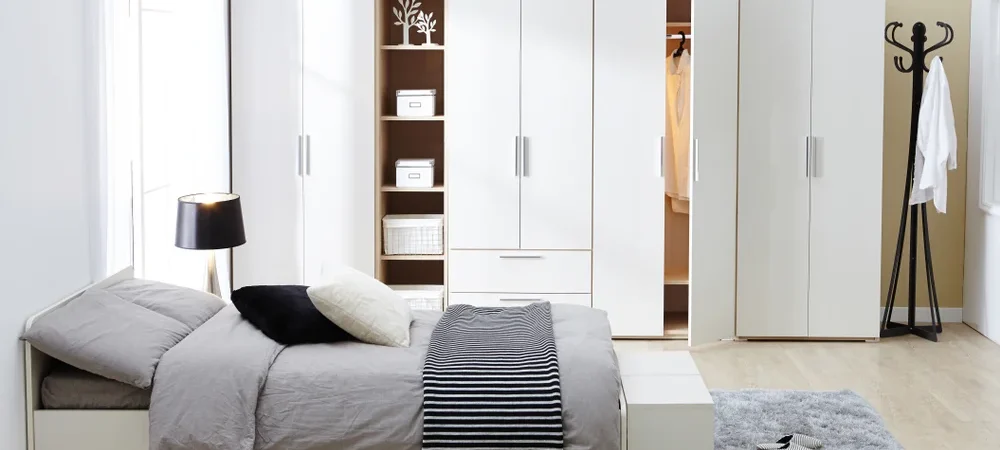
Your closet is probably the last place you think to check for mold — and that’s exactly why it wins. Mold in closets and wardrobes doesn’t announce itself the way a wet basement does. It grows quietly, sometimes for months, behind your winter coats and shoe boxes, until you pull out a jacket and find a colony of grey-green fuzz that’s been there since before you can remember.
Bottom line up front: Closet mold isn’t primarily a cleaning problem — it’s an airflow and moisture problem. You can wipe down every surface and it’ll be back within weeks if you don’t fix the actual conditions driving it. Most guides focus on what to clean. This one focuses on why it keeps coming back.
Why Closets Are Mold’s Favorite Room in the House
Closets check every box mold needs to thrive: low airflow, darkness, and surfaces that hold moisture. Unlike a bathroom where humidity rises and falls dramatically, a closet maintains a slow, steady level of dampness that never quite dissipates. That consistency is actually more dangerous than a single dramatic moisture event.
Here’s the part most people overlook: closets are essentially dead air zones. Your home’s HVAC system circulates air through living spaces, but that circulation rarely reaches deep into a sealed wardrobe or a closet with a closed door. Dead air lets humidity accumulate slowly over days until it hits the saturation point that mold spores need to germinate — roughly 60% relative humidity or higher, sustained for more than 24 to 48 hours.
The darkness isn’t just an aesthetic detail. UV light from the sun is a natural mold inhibitor. Closets get none of it. A spore that lands on a sun-exposed windowsill might never take hold, but the same spore landing on a dark closet shelf has no such obstacle.
What Actually Causes Mold in Closets — The Real Mechanisms
The answer isn’t always a leaking pipe or a flooded basement. In fact, the most common causes of closet mold have nothing to do with an obvious water source. They’re quieter than that — and that’s why they’re so easy to miss.
Clothing itself is a major contributor. Fabric absorbs ambient humidity from the air and releases it slowly. A wardrobe full of tightly packed clothes is essentially a humidity sponge that never gets wrung out. Synthetic fabrics are slightly more resistant, but natural fibers like wool, cotton, and linen hold onto moisture especially well — which is why mold in closets so often appears on your most expensive items first.
Storing clothes while they’re slightly damp is one of the fastest ways to start a mold problem. A shirt that feels dry to the touch after an hour of air drying can still hold residual moisture inside the fibers. Fold it and stack it in a dark wardrobe, and that moisture has nowhere to go.
Here’s the counterintuitive one: exterior-facing walls. Closets built against an outside wall — especially in older homes without adequate insulation — are mold hot spots because that wall is colder than the interior. Warm, humid indoor air hits the cold wall surface and the temperature drops below the dew point, depositing liquid water directly onto the drywall or plaster. This is called condensation mold, and it looks like it came from inside the wall when it actually came from the air in your room.
“Condensation-driven mold in closets is consistently misdiagnosed. Homeowners assume there’s a hidden leak, but in the majority of cases we investigate, the wall is perfectly dry on the exterior side. The moisture source is interior air contacting a cold surface — a ventilation and insulation problem, not a plumbing one.”
Dr. Sandra Kowalski, Indoor Air Quality Specialist and Certified Industrial Hygienist
Which Types of Closets Are Most at Risk?
Not all closets carry the same risk level. Geography plays a role — humid climates create baseline conditions that make closet mold almost inevitable without active management. But even in dry climates, certain closet configurations are structurally prone to problems.
| Closet Type | Risk Level | Primary Reason |
|---|---|---|
| Exterior-facing wall closet | High | Cold surface causes condensation |
| Walk-in closet (no vent) | High | Dead air accumulates humidity |
| Under-stair storage | High | Often near concrete slab, poor insulation |
| Interior hallway closet | Low–Medium | More consistent temperature, less condensation risk |
Walk-in closets deserve special attention because they’re large enough to feel like rooms but are rarely treated like rooms. People don’t crack the window open in a walk-in closet or think about airflow in there. Meanwhile, the relative humidity inside can quietly sit 10 to 15 percentage points higher than the rest of the home.
Under-stair closets are another underestimated risk. Many of them sit directly on or near a concrete slab, and concrete wicks ground moisture upward through a process called vapor diffusion. You don’t need a flood for a concrete-adjacent closet to stay persistently damp. The slab just quietly delivers moisture, year-round, regardless of the season.
How Mold in Closets Actually Starts — The Step-by-Step Process
Understanding the sequence helps you interrupt it before it completes. Mold doesn’t just appear — it follows a predictable path that takes anywhere from 24 hours to several weeks depending on conditions.
- Spores land on a surface. Mold spores are everywhere in indoor air — typically between 200 and 500 spores per cubic meter in a normal home. Your closet already has them. This step requires no special circumstances.
- Humidity rises above 60%. The spores sit dormant until relative humidity in the closet exceeds the germination threshold. Poorly ventilated closets can reach this level simply from the moisture exhaled by stored fabrics and shoes.
- A surface stays damp for 24–48 hours. Mold doesn’t need standing water. A slightly damp wood shelf, a condensation-wet drywall surface, or the inside of a shoe left against a cold wall is enough. Duration matters more than intensity.
- The fungal hyphae extend into the material. Once germination begins, the mold sends threadlike hyphae into porous surfaces — drywall paper, wood grain, fabric fibers — where it digests cellulose for energy. This is when surface wiping stops being effective, because the mold is now below the surface.
- Visible colonies appear. By the time you see fuzzy patches, the colony has been established for at least several days, often longer. What you see on the surface represents the reproductive stage — the mold is already releasing spores back into your closet air.
That last point is worth sitting with. Visible mold is already in its reproduction phase. Every time you open the closet door and disturb those colonies, you’re releasing a fresh wave of spores into the room — spores that settle on your clothes, your shoes, and your lungs.
The Clothing Connection: Why Your Wardrobe Makes Things Worse
There’s a relationship between how you manage your clothes and how mold behaves in your closet that almost nobody talks about. And it goes beyond “don’t store wet clothes.” The density of clothing in a wardrobe directly affects how much moisture gets trapped and how long it stays there.
A tightly packed wardrobe — the kind most of us have — reduces airflow between garments to near zero. Even dry clothes contribute to this by blocking any natural convection that might carry humid air toward a vent or gap in the door. The result is a microclimate inside the wardrobe that stays warmer and more humid than the surrounding room.
It’s also worth knowing that mold can appear on clothing or behind it — meaning the garment itself can either be the victim or an incidental barrier that’s trapping moisture against the wall behind it. When you see a mold patch on a wall that’s been obscured by hanging clothes, the clothes haven’t caused it directly, but they’ve created the conditions for it to grow unchecked.
Leather shoes and bags are particularly susceptible. Leather is an organic material that holds surface moisture and is rich in the organic compounds mold uses as food. A pair of leather boots left in a dark closet through a humid summer can develop visible mold in under two weeks if conditions are right.
How to Tell if You Have Mold in Your Closet (Before It Gets Obvious)
Waiting until you see a grey-green patch is waiting too long. There are earlier signals that most people dismiss as something else entirely.
- Musty smell when you open the door. That earthy, slightly sour odor is microbial volatile organic compounds (mVOCs) — chemical byproducts of active mold growth. If the smell goes away when the door stays open, it’s concentrating inside the closed space.
- White powder on leather items. This is often mistaken for salt residue or efflorescence. On leather goods, white fuzz or powder is typically early-stage mold, not a dye issue.
- Dark speckling near the base of walls. Especially in the corners of the closet floor, dark spots that look like dirt are frequently mold colonies. Corners are where airflow is lowest and humidity pools.
- Clothes that smell musty after washing. If your clothes smell fine when you wash them but pick up an odor after a day in the closet, the closet itself is the source — not the clothes.
- Condensation on the inside of the closet door. Especially in winter, this indicates that warm room air is meeting a cold surface in the closet and depositing moisture right at the threshold.
One thing that’s genuinely easy to misread: those small circular stains on clothing that look like water spots. Sometimes they are water spots. But if they reappear after washing and the garment has been back in the closet for a week, you’re looking at early mold colonization on the fabric fibers — not residue from the washing machine.
What’s Actually Feeding the Mold in Your Closet?
Mold needs three things: moisture, a food source, and suitable temperatures. In a closet, all three are almost always present, which is why closets don’t need a special trigger event to grow mold — they just need time.
The food sources in a typical closet are abundant. Drywall paper (the kraft paper facing on standard drywall) is cellulose — essentially food for mold. Wooden shelving, MDF cabinetry, cardboard boxes, paper shoe inserts, fabric, and even the dust that accumulates on surfaces all provide the organic material mold digests. A closet that looks clean to you is a cafeteria to a mold colony.
Temperature ranges between 60°F and 80°F (15°C to 27°C) are optimal for most common indoor mold species. Your closet, being an interior space in a climate-controlled home, almost always sits in exactly this range. The one scenario where temperature works in your favor is a very cold exterior closet in winter — temperatures below 40°F inhibit mold growth — but that same closet becomes a condensation trap when warm indoor air contacts those cold surfaces.
Pro-Tip: Place a small digital hygrometer inside your closet (they cost under $15) and check it after the door has been closed for 24 hours. If relative humidity inside the closed space exceeds 60%, you have a ventilation problem that will eventually produce mold — even if you can’t see any yet.
Does Closet Construction Affect Mold Risk?
Yes — significantly, and in ways that aren’t always fixable without renovation. This is the honest nuance that depends heavily on your specific situation.
Older homes built before vapor barriers were standard building practice have no moisture management layer between the interior wall surface and the exterior. Cold exterior air chills the wall, interior humidity condenses on it, and the drywall or plaster stays persistently damp. No amount of cleaning solves this; the architecture itself is creating the moisture.
Newer construction using moisture-resistant drywall (commonly called “green board” or cement board) in areas prone to humidity is less susceptible, but it’s rarely installed in closets during standard construction because closets aren’t considered wet areas. That assumption is wrong for exterior-facing closets in humid climates.
The type of flooring in the closet matters too. Carpet in closets — still common in bedrooms from older builds — holds moisture in the pile and backing for far longer than hard flooring. A carpet that gets slightly damp from a shoe or humid air can stay wet enough at the base for days without feeling damp to the touch on top.
Seasonal Patterns: When Closet Mold Is Most Likely to Develop
Closet mold doesn’t happen randomly — it follows patterns tied to weather, habits, and how we use our homes differently across the seasons. Knowing when the risk peaks helps you catch it before it becomes established.
Late summer is historically the highest-risk period in most temperate climates. Outdoor humidity has been elevated for weeks, homes have been running air conditioning (which dries interior air at the vents but leaves dead-air zones like closets largely unaffected), and clothes from outdoor activities are being cycled in and out regularly. That rotation brings outdoor humidity directly into the wardrobe with each use.
The shoulder seasons — the weeks when outdoor temperatures drop but indoor heating hasn’t started in earnest — create a different kind of risk. Exterior walls get cold faster than the home adjusts, and the condensation window opens before most people think to look for it. A closet built against a north-facing exterior wall in early autumn is essentially running the same conditions as a refrigerator interior contacting warm kitchen air.
A real scenario worth picturing: a family returns from a two-week summer vacation to find a musty smell throughout the master bedroom. The culprit isn’t the bathroom — it’s the walk-in closet on the exterior wall, where the air conditioner kept the rest of the house cool while the dead air inside the closed closet stayed warm and humid. Without air movement or a dehumidifier running inside the closet space, relative humidity climbed past 70% within a few days and mold established itself on the back wall behind a rack of hanging coats.
Why Cleaning Alone Won’t Fix Mold in Closets
This is probably the most important thing to understand about closet mold — and most guides quietly avoid it because it complicates the “here’s how to fix it” narrative. Cleaning mold off a surface is a short-term intervention. Without addressing the underlying moisture conditions, regrowth typically occurs within 2 to 8 weeks.
Bleach, which is the go-to recommendation for mold remediation, is effective at killing surface mold on non-porous surfaces like tile or painted concrete. On porous surfaces — drywall, wood, fabric, cardboard — bleach doesn’t penetrate deeply enough to kill hyphae that have grown into the material. The surface looks clean, but the structure of the mold remains inside the material, ready to repopulate when conditions are right again.
The honest sequence is: fix the moisture first, then clean, then prevent recurrence with improved airflow. Doing it in any other order is treating the symptom while the cause keeps running.
Practical Changes That Address the Root Cause
These aren’t one-time tasks — they’re habit and setup changes that interrupt the moisture cycle that drives closet mold. Some cost nothing. Others require a small investment that pays off quickly.
- Leave the closet door ajar for at least an hour daily. Even a 2-inch gap allows enough air exchange to prevent humidity from accumulating in the dead air zone. This alone can drop interior closet humidity by 8 to 12 percentage points in a moderately humid climate.
- Never store clothes that have been worn but not washed. Body perspiration adds significant moisture to fabric. A pile of worn-but-not-laundered clothes in a wardrobe is essentially a humidity generator.
- Replace solid wardrobe doors with louvered or slatted versions. Louvered doors allow passive airflow without sacrificing aesthetics or privacy. The difference in interior humidity can be measurable.
- Use moisture absorbers like silica gel or calcium chloride canisters. These passively absorb airborne moisture and are particularly effective in small, sealed wardrobes. Replace or recharge them when they saturate — typically every 4 to 8 weeks depending on ambient humidity.
- Insulate exterior-facing closet walls from the interior side. If your closet backs an exterior wall, a thin layer of rigid foam insulation on the interior surface raises the wall temperature above the dew point and stops condensation formation at the source.
One specific habit that trips people up: airing out shoes before putting them away. Shoes that have been worn collect foot perspiration and, if worn outdoors, ambient humidity. Putting them directly into a dark enclosed space — especially a shoe box — creates a perfect mold incubator. Letting them sit in open air for two to four hours before storage makes a real difference.
When Is Closet Mold a Health Concern?
Most closet mold species — Cladosporium, Penicillium, Aspergillus — are common environmental molds that healthy adults can tolerate in small exposures without significant symptoms. That doesn’t mean closet mold is harmless. It means the risk is proportional to the scale of the problem, the duration of exposure, and the health status of the people in the home.
Children, elderly adults, and people with asthma, allergies, or compromised immune systems are meaningfully more vulnerable. Regular inhalation of mold spores — even common species — can trigger or worsen respiratory symptoms, cause skin irritation, and aggravate conditions like sinusitis. A closet that you open and close daily puts you in spore contact repeatedly, which matters even if each individual exposure seems minor.
If you’re finding large colonies (anything covering more than 10 square feet, or any growth that’s penetrated into the drywall or subfloor), professional assessment is warranted. That’s not fear-mongering — it’s a practical threshold. Disturbing large established mold colonies without proper containment releases enough spores to meaningfully elevate indoor air spore counts for hours.
The threshold changes if you’re in a rented property. If closet mold is extensive and stems from building deficiencies — inadequate insulation, construction without vapor barriers, persistent plumbing leaks — that’s a landlord responsibility in most jurisdictions. Documenting the mold and the conditions causing it before attempting any cleaning is worth doing.
The One Thing That Would Actually Prevent Most Closet Mold
If you had to pick a single change that would prevent the majority of closet mold problems, it wouldn’t be a cleaning product or a special material. It would be airflow. Specifically: treating your closet air as connected to the rest of your home’s air, rather than as a separate sealed environment.
Homes with HVAC supply
Frequently Asked Questions
Why does mold grow in closets?
Mold grows in closets because humidity becomes trapped and airflow is severely limited in these enclosed spaces. When doors remain closed for extended periods, moisture can’t escape naturally, creating consistently humid conditions that support mold development even when the surrounding room feels dry.
Can mold appear without leaks?
Yes, humidity and condensation alone are sufficient for mold growth without any water leaks. When humid air gets trapped in closets and encounters cool surfaces, condensation forms and provides the moisture mold spores need to establish colonies on organic materials like wood, paper, or fabric.
Why do clothes smell musty?
Clothes smell musty because fabrics absorb moisture from humid air and release odors slowly over time. Natural fibers can absorb 15-20% of their weight in moisture before feeling damp, and this trapped moisture becomes a breeding ground for the microorganisms that produce musty odors.
Is closet mold common?
Yes, closets are among the most common locations for hidden mold growth in homes. The combination of poor ventilation, temperature fluctuations, and organic materials creates ideal conditions for mold development, making closet mold more frequent than many homeowners realize.
Disclaimer: This article is for informational purposes only and isn’t a substitute for professional mold inspection or remediation advice. Mold problems vary a lot depending on the material affected, the extent of growth, and your specific health situation. Always follow product label instructions when using cleaning chemicals, ensure proper ventilation, and consider consulting a certified mold remediation professional for anything beyond a small, surface-level patch. If you have respiratory conditions, allergies, or a compromised immune system, talk to a doctor before starting any DIY mold removal.