

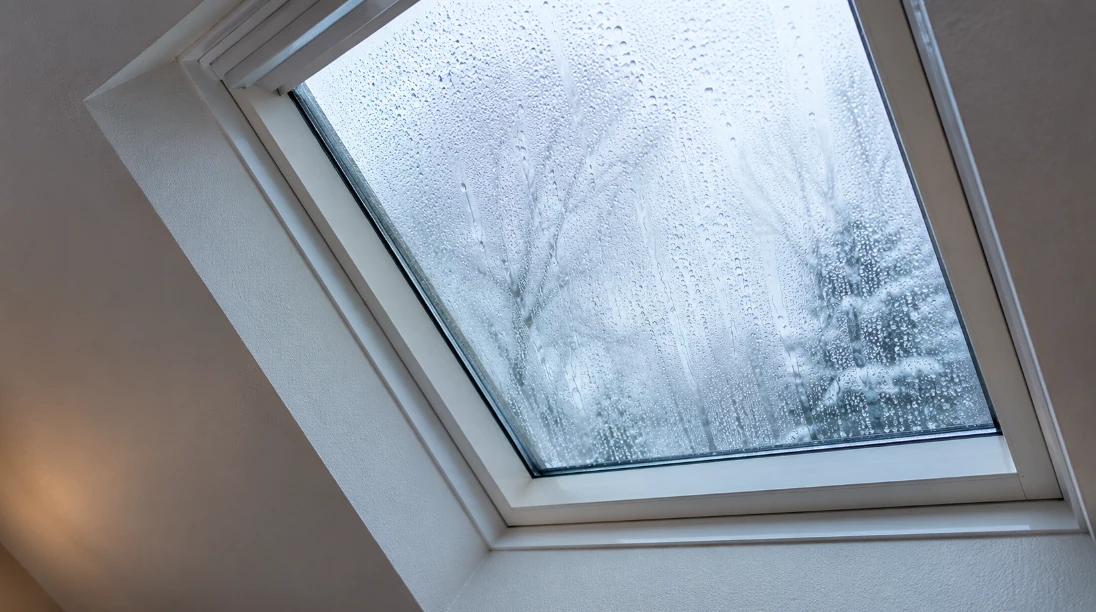
A drip under a skylight often leads most people to one conclusion: the skylight is leaking. Often it is doing something else entirely. On cold mornings, skylight glass is frequently the chilliest surface in the room, and the water running down the shaft may have come from your own shower, cooking and breathing overnight. The fix for that problem costs almost nothing. Fixing a real leak is urgent, and mixing the two up wastes either money or time.
Telling them apart takes a few minutes of observation. Water pouring in during a storm calls for emergency skylight repair within hours, while dripping on a cold, dry morning usually points to indoor humidity you can bring down yourself. This guide walks through how condensation forms, the quick checks that separate it from a leak, and the first steps for each situation.
Why Skylights Collect Condensation
Warm air holds more water vapor than cold air. When indoor air touches a surface colder than its dew point, the vapor turns back into liquid on that surface. EPA’s indoor air guidance calls the coldest spot in a room the “first condensing surface,” because condensation shows up there before anywhere else.
Skylights are set up to become that surface. They sit at the highest point of the room, where warm, moist air naturally collects. Their glass faces the open sky, which pulls heat away on clear winter nights. And the shaft around them is often a tight, poorly ventilated box where humid air lingers.
The numbers below show how indoor humidity changes the temperature at which water starts forming. These dew points are calculated for a room at 70°F:
| Indoor relative humidity at 70°F | Dew point | What it means for skylight glass |
| 30% | about 37°F | Glass can get quite cold before water appears |
| 40% | about 45°F | Condensation likely on older or single-pane glass in freezing weather |
| 50% | about 51°F | Even insulated glass can sweat on cold nights |
| 60% | about 56°F | Condensation is likely on many surfaces; mold risk rises |
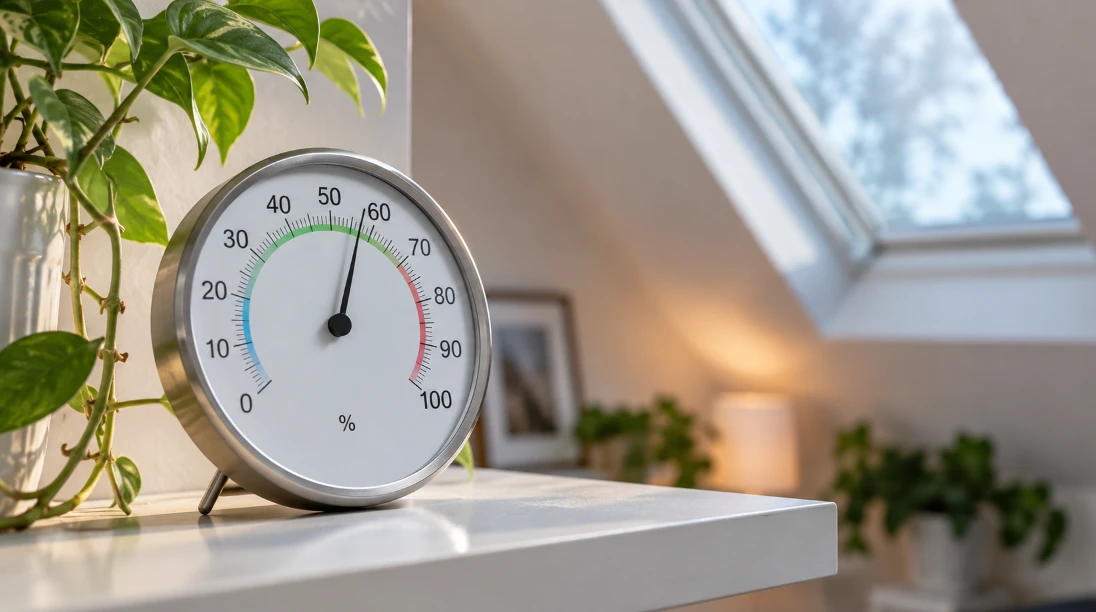
EPA recommends keeping indoor humidity below 60 percent and ideally between 30 and 50 percent. The table shows why that upper range matters so much at a skylight. At 60 percent, the inner pane only has to fall to about 56°F before it starts dripping.
The Quick Test – Timing Tells You Most
The single most useful clue is when the water appears. Skylight maker Dakea puts it simply: if a roof window drips when it is cold but not particularly when it rains, it is most likely condensation on the inside of the glass.
Keep a short log for a week. Write down the date, whether it rained or snowed, the outdoor temperature, and when you found water. Condensation follows cold weather and indoor activity: early mornings, the hour after a long shower, a big pot of pasta, or a night with a humidifier running. Leaks follow weather: rain, wind-driven storms and snowmelt.
Winter adds one trap worth knowing about. Snow on the roof can melt from household heat, refreeze at the edge and form an ice dam, which pushes water back under shingles and flashing. That kind of leak can show up on a dry, sunny day after a snowfall, so a sunny-day drip in snow season still deserves a closer look.
Clues That Point to a Real Leak
Condensation tends to spread evenly across the glass as fine droplets or fog. Leaks behave differently because water is traveling along a path from outside. Look for these signs:
- Water appears during or shortly after rain or snowmelt, and stays away on cold, dry days.
- Drips come from one corner, one edge of the frame or one spot on the shaft, instead of the whole pane.
- Stains on the drywall grow larger after each storm.
- The insulation or framing above the shaft feels wet when you check it from the attic.
- You can see cracked glass, gaps in the flashing or loose shingles around the skylight from outside.
- Fog or droplets between the two panes of insulated glass mean the seal has failed.
One clue alone can mislead you. Two or three together make a leak much more likely, and that is the point to call a professional instead of continuing to watch.
What to Do First If Water Is Coming In
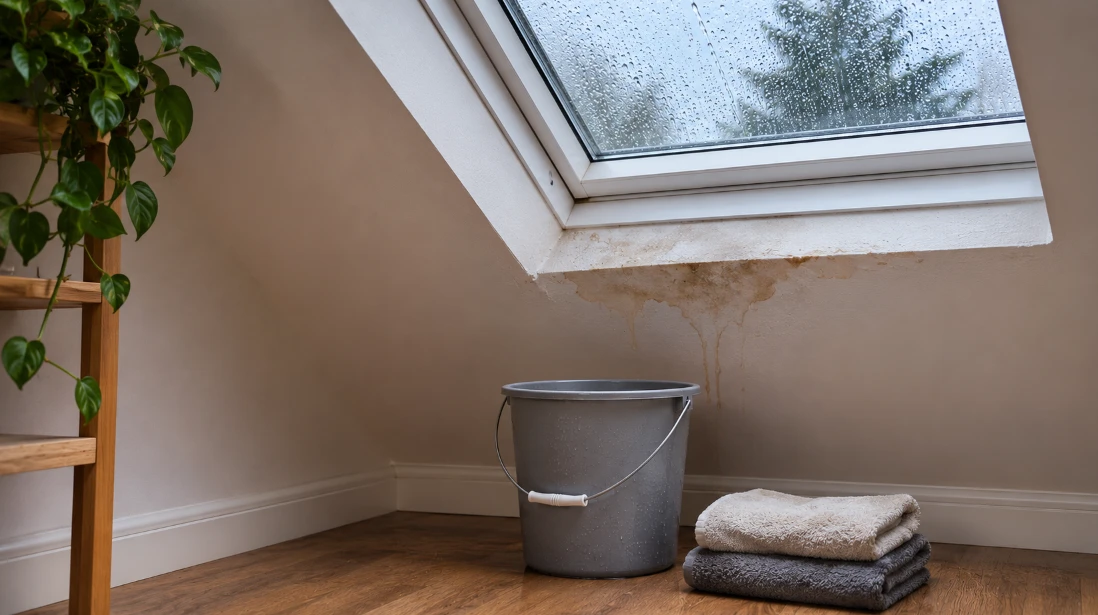
A real leak during a storm is a damage-control situation. Start by protecting the room. Put a bucket or tub under the drip, lay towels to catch splashes and move furniture, rugs and electronics out of the way. If the skylight shaft has a light fixture, or the ceiling near the drip does, turn that circuit off at the breaker until the area is dry.
Take photos and short videos of the water, the ceiling and any damaged belongings. Insurance adjusters and landlords respond faster when you provide dated photos. Renters should notify the landlord or property manager in writing the same day, since roof and skylight repairs in an apartment building usually fall to the owner.
Stay off the roof. Wet shingles, ice and wind make it dangerous, and a temporary patch from a trained crew will hold better than anything applied in the rain. Once the water stops, start drying. EPA advises drying wet materials within 24 to 48 hours, because in most cases mold will not grow if damp areas are dried in that window. Fans, a dehumidifier and open interior doors all speed things up. If drywall or insulation stays soaked after two days, it will probably need to be cut out and replaced.
What to Do If It Is Condensation
Condensation is a humidity problem first and a skylight problem second. Buy a hygrometer, which EPA notes is an inexpensive instrument available at many hardware stores, and place it in the room with the skylight. Readings above 50 percent in winter tell you where to start.
Run bathroom exhaust fans during showers and for 20 minutes afterward, and use the range hood every time you cook. If you run a humidifier in winter, turn its setting down until the glass stays dry in the morning. A ceiling fan on low helps move warm room air across the shaft so moist air does not stall against the glass. Keep shades or blinds at the skylight open on cold nights when possible, since closed shades trap a pocket of cold air right against the pane.
The skylight itself can make a difference too. VELUX notes that Low-E insulated glass keeps the interior pane warmer and reduces the chance of condensation. Older single-pane or plastic dome units are far more prone to sweating, and venting models let you release moist air directly. Poor insulation around the shaft also creates cold spots, so it’s worth checking the shaft walls in the attic.
When Both Problems Happen at Once
Some skylights leak and sweat at the same time, which confuses even careful observers. VELUX points out that condensation can form on more than just glass. If an installer left out the roofing underlay between the frame and the roofing material, moisture can condense on the underside of the cladding and drip inside, looking like a leak even in dry weather.
A failed insulated glass seal blurs the line, too. Once the seal between the panes fails, the unit loses much of its insulating value, the inner pane runs colder and condensation becomes more frequent. That glass needs replacement even if no rain gets in.
If your log shows water in both cold, dry weather and during storms, treat it as two problems. Lower the indoor humidity first, then watch what still happens when it rains. Whatever water still shows up during storms is coming from outside.
Mold Around the Skylight Well
Repeated wetting, whatever its source, eventually shows up as dark spots on the shaft’s drywall or on the window frame. EPA guidance says that if the moldy area is less than about 10 square feet, you can handle the cleanup yourself in most cases by using detergent and water on hard surfaces and drying them completely. Porous materials like ceiling tiles or soaked drywall that grow mold may have to be thrown away.
Cleaning only treats the symptom. Mold will return to the same spot until the moisture source is fixed, whether that means lower indoor humidity, a better-insulated shaft or a proper repair of the flashing and glass. People with asthma, allergies or weakened immune systems should leave larger cleanups to professionals.
Your humidity log becomes valuable here too. A roofer or skylight technician who can see a week of hygrometer readings next to the dates water appeared can tell a humidity problem from a flashing failure in minutes, and that record often saves you from paying for repairs the skylight never needed.