
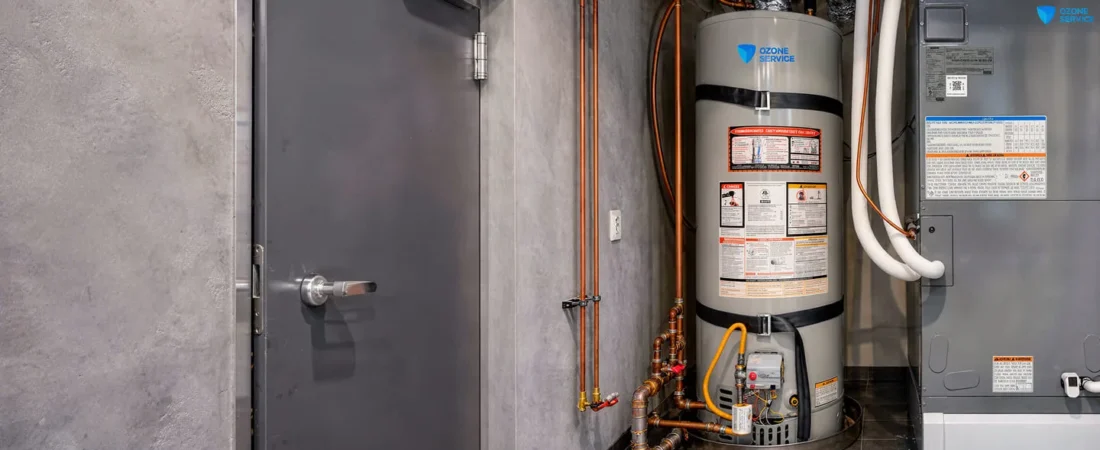
Water heating is one of the largest energy costs in a typical home, often second only to heating and cooling. For decades, the choice was simple: a gas tank or an electric resistance tank. Heat pump water heaters have changed that. They use the same principle as a refrigerator in reverse, pulling heat from the surrounding air and moving it into the water instead of generating heat directly. The result is a unit that can use a fraction of the electricity of a standard electric tank.
That efficiency is real, but a heat pump water heater isn’t the right fit for every house or every location inside a house. Here is what to think through before you switch.
How a heat pump water heater actually works

A heat pump water heater has a small compressor and fan on top of a storage tank. The fan draws in room air, a refrigerant absorbs heat from that air, and the compressor raises its temperature enough to warm the water in the tank. Most models also include backup electric elements for periods of very high demand.
Because the unit moves heat rather than creating it, it typically operates two to four times more efficiently than a conventional electric water heater. In homes switching from an older electric tank, the drop in water heating costs is usually noticeable within the first few months.
Space and airflow matter more than people expect

The most common installation problem isn’t the equipment. It’s the location. A heat pump water heater needs:
- Enough air volume. Manufacturers usually call for a space of several hundred cubic feet, or a louvered door or ducting if the room is small. A tight closet without ventilation will hurt performance.
- Clearance on top. These units are taller than standard tanks because of the compressor housing. Measure the ceiling height before you buy.
- A condensate drain. Like an air conditioner, the unit removes moisture from the air, so the water has to go somewhere.
Garages, basements, and utility rooms are usually ideal. A side benefit: the unit cools and dehumidifies the space around it, which many homeowners appreciate in a warm garage.
What about noise and cold air?
A heat pump water heater produces a low hum, roughly comparable to a modern refrigerator or a window AC on its lowest setting. In a garage or basement, it’s rarely an issue. Next to a bedroom, it may be.
The unit also exhausts cooler air. In mild climates this is a non-issue or even a plus. In a cold basement during winter, some homeowners prefer to duct the exhaust air outside or choose a model with ducting options.
Do you need an electrical upgrade?
This is one of the biggest concerns homeowners raise, and the answer is usually reassuring. Many heat pump water heaters run on a standard 240-volt circuit similar to what an existing electric tank already uses. Some newer models are even designed to plug into an ordinary 120-volt outlet.
In most cases, switching to a heat pump water heater doesn’t require replacing the electrical panel. A qualified installer will look at your existing circuits and panel capacity first, so you only pay for electrical work that’s actually necessary.
Savings, lifespan, and incentives
Heat pump water heaters cost more upfront than standard tanks, but lower operating costs typically close that gap over the life of the unit. Many models are rated to last 10 to 15 years with basic maintenance, such as cleaning the air filter and flushing the tank periodically.
In many states, local utilities and energy programs offer rebates for switching to heat pump equipment. These programs change often, so it’s worth asking your installer what’s currently available in your area before you buy.
Choosing the right installer
A heat pump water heater is a hybrid of plumbing, electrical, and refrigeration equipment, so experience matters. Look for a contractor who installs these systems regularly, checks the location and airflow before quoting, and handles permits. Proper heat pump water heater installation includes sizing the tank to your household, routing the condensate drain correctly, and confirming the electrical setup.
Climate and housing stock make a difference too. In mild regions like the San Francisco Bay Area, where many homes have garages that stay moderate year-round, heat pump water heaters perform especially well. Homeowners there often combine the upgrade with other electrification work, and working with a local team that provides full HVAC services in Santa Clara and nearby cities makes it easier to plan everything at once.
The bottom line
A heat pump water heater is one of the most cost-effective efficiency upgrades for most homes, as long as it goes in the right space. Check your available room, think about noise and airflow, and have a professional assess your electrical setup. Done right, it delivers years of lower energy bills with very little effort on your part.