
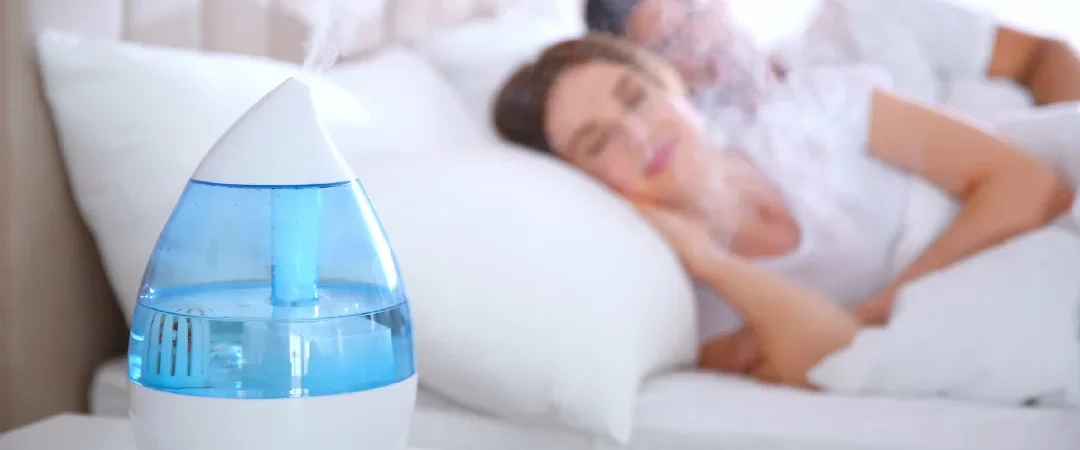
Bottom line up front: Yes, sleeping in a humid room is bad for your health and sleep quality — but not always for the reasons you’d expect. The real damage isn’t just sweating through your sheets. High bedroom humidity quietly disrupts your core body temperature regulation, which is the single most important physiological trigger for deep, restorative sleep. Fix the humidity, and you’re not just more comfortable — you’re fundamentally sleeping better.
What Does “Too Humid” Actually Mean for a Bedroom?
Relative humidity above 60% in a bedroom is where things start going wrong. The EPA and most sleep researchers point to a sweet spot of 40–50% relative humidity as optimal for both health and sleep, with 30–60% being the broadly acceptable range. Once you climb past 60%, the problems compound quickly — mold spores become viable, dust mite populations surge, and your body’s ability to cool itself through sweat evaporation starts breaking down.
Here’s the part most articles skip over entirely: it’s not just about how the air feels. At 70% relative humidity, sweat evaporates roughly 40% slower than at 50% — meaning your body genuinely cannot shed heat at the rate it needs to during the critical temperature drop that initiates deep sleep. That’s not a comfort complaint; that’s a biological interference with your sleep architecture.
Low humidity causes its own problems, of course. Dry air below 30% irritates mucous membranes, worsens snoring, and dries out skin. Acknowledging that nuance matters, because the goal is balance — not simply “lower is better.”
Why Does Sleeping in a Humid Room Disrupt Sleep Quality?
Your core body temperature needs to drop by about 1–2°F within the first hour of sleep for you to progress into slow-wave (deep) sleep. That cooling process depends almost entirely on heat dissipating through your skin — specifically, through the evaporation of moisture. High ambient humidity puts a ceiling on how fast that evaporation can happen.
The result is that you spend more time in lighter sleep stages — N1 and N2 — while deep sleep and REM sleep get compressed. You might technically sleep eight hours and still wake up feeling like you got five. Research published in sleep science literature consistently links elevated bedroom temperatures and humidity to increased nighttime waking, reduced slow-wave sleep duration, and lower subjective sleep quality ratings.
There’s also a secondary mechanism that almost nobody talks about: elevated humidity increases CO2 concentration in the breathing zone around your face as you sleep. Moist, warm air is denser and circulates less effectively — so if you’re already sleeping in a poorly ventilated room, high humidity makes the air quality problem measurably worse.
“The relationship between humidity and sleep is mediated primarily through thermoregulation. When the bedroom environment prevents the body from executing its natural nocturnal temperature drop, sleep architecture suffers in ways that accumulated sleep debt alone doesn’t explain. We see this clinically in patients who complain of unrefreshing sleep despite adequate duration — often the bedroom environment is the overlooked variable.”
Dr. Rachel Simmons, Board-Certified Sleep Medicine Physician and Clinical Researcher
What Are the Health Effects of Sleeping in a Humid Room Long-Term?
Chronic exposure to high bedroom humidity creates a cascade of health problems that extend well beyond poor sleep. Dust mites — the microscopic arthropods that thrive at humidity above 50% — produce fecal proteins that are among the most potent indoor allergens known. A single gram of house dust can contain thousands of mite fecal particles, and your mattress and pillowcase are their preferred habitat.
Sleeping in that environment night after night means roughly 7–8 hours of continuous allergen exposure, which is why people with unexplained chronic allergies, asthma flares, or morning congestion often improve dramatically once they bring bedroom humidity under control. Mold spores present a similar but more serious threat — Cladosporium, Aspergillus, and Penicillium species can colonize bedding, drywall, and subflooring at humidity levels above 60%, releasing mycotoxins into the air you’re breathing all night.
Beyond the respiratory issues, persistent high humidity can trigger headaches — partly due to the allergen load and partly because disrupted sleep itself is one of the most reliable headache triggers. Skin problems are also common: humid sleeping environments create ideal conditions for bacterial and fungal growth on skin, contributing to issues like folliculitis and fungal rashes that people often misattribute to other causes.
How High Humidity Affects Different People Differently
Not everyone experiences humid sleep environments the same way, and that’s an honest truth most one-size-fits-all guides ignore. Children and older adults are more vulnerable because their thermoregulatory systems are less efficient — kids overheat faster and elderly individuals have a reduced ability to perceive temperature discomfort and adjust accordingly. That makes high bedroom humidity more physiologically dangerous for them, not just uncomfortable.
People with asthma or allergic rhinitis are in a separate category of concern entirely. For them, a bedroom consistently above 55% humidity isn’t just an annoyance — it’s an active trigger environment that can worsen nighttime symptoms, increase the frequency of asthma attacks, and create a chronic low-grade inflammatory state in the airways. The clinical threshold that pulmonologists often use for these patients is stricter: keep bedroom humidity at or below 50%.
Interestingly, people who are heavier or who naturally sleep hot are not simply “more sensitive” to humidity — their bodies are producing more metabolic heat during sleep, which means the humidity-driven limitation on sweat evaporation hits them harder and faster. It’s a compounding effect, not a sensitivity issue.
What Causes High Humidity in Bedrooms Specifically?
Bedrooms are humidity traps by design. You’re sealing yourself in a relatively small space and breathing out warm, moist air for 7–8 hours — each exhaled breath contains water vapor, and two sleeping adults can contribute nearly a pint of moisture to the air per hour. Add any moisture intrusion from adjacent bathrooms, basements below, or exterior walls and you have a space that almost wants to be humid.
A real-world scenario that illustrates this well: a couple living in a ground-floor apartment closes the bedroom door at night for privacy, runs a humidifier because one partner has dry-skin concerns, and by 3 a.m. the room is at 68% relative humidity. Both partners are sleeping restlessly, waking frequently, and attributing it to stress or “just how they sleep” — when the actual culprit is a fixable environmental problem they’ve never measured.
Common bedroom humidity sources break down like this:
- Occupant respiration and skin transpiration (significant — don’t underestimate this)
- En-suite or adjacent bathroom moisture migrating through gaps
- Exterior wall condensation in poorly insulated homes
- Overactive or improperly sized humidifiers
- Houseplants near or in the bedroom (they transpire continuously)
- Wet laundry dried inside the room
How to Tell If Your Bedroom Humidity Is Too High
The single most reliable method is a hygrometer — a digital humidity monitor that costs between $10 and $25 and sits on your nightstand. Don’t rely on how the air “feels.” At 65% humidity, a room can feel only mildly stuffy to someone who hasn’t experienced lower humidity recently; your perception calibrates to what you’re used to, which makes it a terrible diagnostic tool.
Place the hygrometer at mattress level, not on a high shelf. Hot, moist air stratifies, but the relevant measurement is the air you’re actually breathing and your body is exchanging heat with all night. Check it first thing in the morning, before you open the door or window — that reading represents what your body was working against for the past several hours.
Secondary signs that suggest a bedroom humidity problem include: condensation on bedroom windows on mild nights (not just cold winter mornings), a musty or faintly earthy smell that isn’t explained by visible dirt, waking up with a stuffy nose that clears within an hour of leaving the room, and pillowcases that feel consistently damp by morning even when the room doesn’t feel excessively warm.
Is a Humid Room Bad for Breathing While You Sleep?
Yes — and the mechanism is more direct than most people realize. Humid air is not “thicker” in a meaningful sense, but it is warmer and carries more particulate matter in suspension. Allergens like mold spores, dust mite debris, and pet dander all travel more effectively in humid air because the moisture helps them stay airborne longer rather than settling out.
For people without allergies or asthma, the respiratory impact of a moderately humid bedroom (60–70%) is more subtle: slight increase in nasal congestion, minor swelling of mucous membranes, and marginally elevated airway resistance. That last one matters for snoring — higher airway resistance means turbulent airflow through the throat, which is what generates snoring sound. So if your partner’s snoring gets worse in summer months when the bedroom is more humid, that’s likely not a coincidence.
At humidity levels above 70%, the breathing-zone CO2 issue mentioned earlier becomes more significant. Warm, moist air near your face creates a micro-environment with slightly elevated CO2 — not dangerous, but enough to increase arousal frequency and make sleep feel less restful. This is almost never considered when people investigate breathing-related sleep problems, yet it’s entirely addressable with airflow adjustments.
What’s the Ideal Humidity Level for Sleeping?
The research-backed target is 40–50% relative humidity for sleeping environments. That range supports efficient sweat evaporation for thermoregulation, stays below the threshold that enables dust mite reproduction and mold growth, and keeps airways comfortably hydrated without over-moistening the breathing zone. Think of it as the humidity equivalent of a comfortable ambient temperature — not too much, not too little.
| Humidity Level | Sleep & Health Impact |
|---|---|
| Below 30% | Dry airways, irritated mucous membranes, increased snoring, skin dryness |
| 30–50% (Optimal) | Efficient thermoregulation, minimal allergen growth, comfortable breathing |
| 50–60% (Borderline) | Dust mite activity increases; sensitive individuals may notice symptoms |
| Above 60% | Significant sleep disruption, mold risk, allergen surge, respiratory effects |
The counterintuitive insight here: temperature and humidity interact, and a bedroom at 68°F with 55% humidity can actually feel and function better for sleep than a bedroom at 72°F with 45% humidity. The cooler temperature compensates for slightly elevated humidity by reducing total metabolic heat production — so if you can’t easily control humidity, controlling temperature becomes more valuable, not less.
How to Lower Bedroom Humidity for Better Sleep
Start with the simplest interventions before investing in equipment. Opening the bedroom door slightly — even a few inches — dramatically increases air exchange with the rest of the house and prevents moisture from building up from your body’s respiration overnight. If outdoor humidity is lower than indoor (common in the morning), cracking a window for 20 minutes before bed can drop bedroom humidity by 5–8 percentage points.
Here are the most effective interventions, ranked by impact:
- Run a dehumidifier sized for your room: A unit rated for your square footage will maintain target humidity reliably — aim for one with a humidistat so it cycles off at your target level rather than running continuously.
- Improve bedroom ventilation: Even a small fan pointed toward a door gap increases air exchange significantly. Stagnant air lets humidity accumulate; moving air disperses it.
- Switch to moisture-wicking bedding: Synthetic or bamboo-derived fabrics draw perspiration away from skin faster than cotton, reducing the micro-humidity immediately around your body where it matters most.
- Lower the room temperature: Cooler air holds less moisture at saturation, which means your room’s effective relative humidity drops as temperature drops — without removing any actual water from the air.
- Remove humidity sources from the bedroom: Relocate houseplants, stop drying clothes in the room, and check whether the adjacent bathroom needs better exhaust ventilation.
Pro-Tip: Run your dehumidifier in the two hours before bed, not just while you’re sleeping. Pre-conditioning the bedroom air to 45–50% before you get in gives your thermoregulation system a head start on the temperature drop you need to fall into deep sleep — and it means the dehumidifier noise isn’t disturbing you once you’re trying to drift off.
Does Sleeping in a Humid Room Cause Mold in the Bedroom?
Consistently high bedroom humidity doesn’t just allow mold — it actively selects for it. Mold spores are always present in indoor air; what determines whether they colonize a surface is whether that surface stays above 60% relative humidity for extended periods. Your bedroom, with 7–8 hours of elevated humidity every night from your body’s moisture output, is exactly the kind of environment mold is designed to exploit.
The locations that become colonized first aren’t always obvious. It’s often the back of headboards against exterior walls, the underside of mattresses near the floor, the corners where walls meet ceilings (especially in rooms above kitchens or bathrooms), and inside pillow inserts — not just the obvious places like window frames. People sleep in that mold environment for months before seeing any visible growth, breathing in spores the entire time.
Mold remediation is expensive and disruptive; preventing the humidity conditions that allow colonization is dramatically easier. If you can maintain bedroom humidity below 55% consistently, you’ve effectively eliminated the primary growth condition. The spores are still there, but without the moisture to activate, they remain inert.
Is Sleeping with a Humidifier Running Bad for You?
Running a humidifier in a bedroom that doesn’t need one — or using one that’s too large for the space — is one of the more common ways people unintentionally create the exact problem they’re trying to solve. Many people run humidifiers for legitimate reasons: dry sinuses, winter air, skin concerns. The mistake is running one without measuring what’s actually happening to humidity levels.
A humidifier in a closed bedroom in summer, even a small one, can push humidity from a comfortable 45% to an uncomfortable 70% within a few hours. Add two sleeping people generating moisture, and you can hit 75–80% by morning. That’s the scenario where people wake up feeling worse than when they went to bed and can’t understand why — because they associate the humidifier with health, not harm.
The fix is straightforward: use a humidifier with an integrated humidistat set to shut off at 50%, and place your hygrometer away from the humidifier so you’re measuring room air, not the output directly. Humidifiers are useful tools in genuinely dry conditions — they just need to be aimed at a target, not run indefinitely.
Can You Sleep Better Just by Managing Bedroom Humidity?
The evidence suggests yes — sometimes dramatically so. People who’ve been blaming poor sleep on stress, screen time, or caffeine timing occasionally find that bringing bedroom humidity into the 40–50% range produces an immediate and noticeable improvement in sleep quality. That’s because the mechanism (thermoregulation) is so directly tied to sleep architecture that removing the obstacle can produce results within one or two nights.
That said, humidity is one variable among several. If you’re also dealing with noise, light, a sleep disorder, or anxiety, fixing humidity alone won’t resolve everything. It tends to be most impactful as a standalone fix for people who sleep in warm climates or in naturally humid homes, and for people whose sleep quality has degraded over a period that corresponds with a humidifier being added or a season changing.
The honest truth is that bedroom environment — temperature, humidity, light, and air quality together — is one of the most modifiable aspects of sleep health. Most people have significantly more control over their sleep environment than they realize, and humidity is the variable they’re least likely to have measured or considered.
Your bedroom air is something you’re in contact with for a third of your life. The quality of that air doesn’t just affect how you feel at night — it shapes how recovered, sharp, and resilient you feel every day. The people who take humidity seriously aren’t obsessing over minor comfort adjustments; they’re optimizing the one environment where recovery actually happens.
Frequently Asked Questions
Is it unhealthy to sleep in a humid room?
Occasionally no, but persistent humidity can reduce comfort and sleep quality.
Why do I wake up feeling stuffy?
Because moisture accumulated overnight in a closed room.
Does humid air affect breathing at night?
It can feel less comfortable, especially in still air.
Can bedroom humidity cause mold?
Yes, if elevated humidity persists over time.