
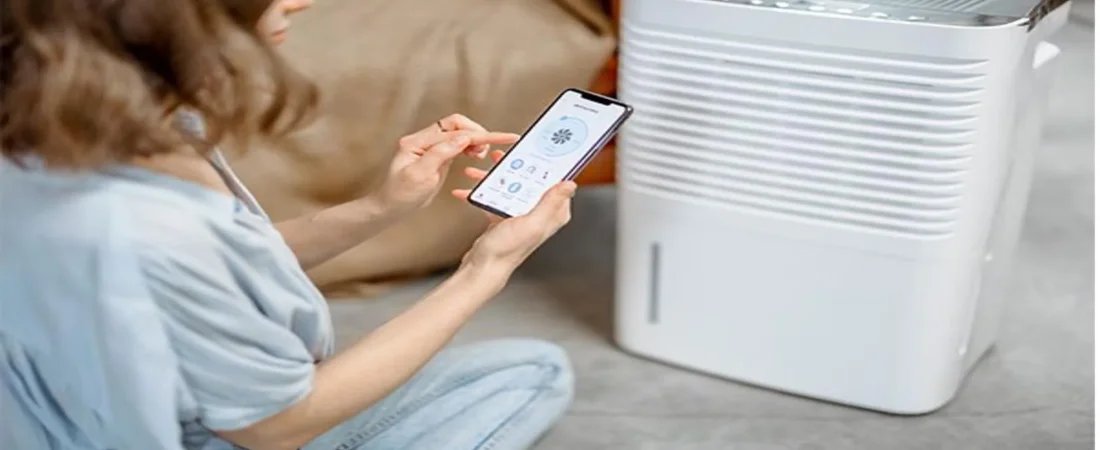
Bottom line up front: Dehumidifiers work — but not the way most people think they do. They don’t fix moisture problems. They manage the symptoms of moisture problems. That distinction sounds minor, but it’s the reason so many people run a dehumidifier for months, empty the tank twice a day, and still end up with mold in the corner of their basement.
The real question isn’t whether dehumidifiers work. It’s whether they’re the right tool for your specific situation — and whether you’re using them in a way that actually addresses the source of your humidity, not just the air above it.
This article is going to walk you through exactly how dehumidifiers function, where they genuinely perform well, where they quietly fail you, and what the research says about effective humidity control. No fluff, just the stuff that actually changes how you handle moisture at home.
Do Dehumidifiers Actually Work to Lower Indoor Humidity?
Yes, dehumidifiers do lower relative humidity — that part is well-established physics. A standard refrigerant-based dehumidifier pulls warm, moist room air across a cold coil, condenses the moisture out of it, collects that water in a tank (or drains it), and pushes drier air back into the room. In a controlled environment, they’re remarkably effective at this.
The problem is that your home isn’t a controlled environment. Humidity is dynamic — it migrates through walls, rises through concrete slabs, seeps in around window frames, and gets generated constantly by cooking, showering, breathing, and even houseplants. A dehumidifier running in that environment is essentially bailing out a leaky boat without plugging the hole.
That said, “bailing out the boat” is still useful when the hole is slow and the water is rising. The honest answer is that dehumidifiers work very well in specific scenarios and are largely wasted effort in others — and most guides never actually draw that line clearly.
How Does a Dehumidifier Actually Remove Moisture From Air?
There are two main types of dehumidifiers on the market, and they use fundamentally different mechanisms. Understanding which type you have — or which you need — matters more than most people realize.
Refrigerant (compressor-based) dehumidifiers work like a refrigerator in reverse. Room air passes over a cold evaporator coil, the moisture in the air condenses into liquid, and that liquid drips into a collection tank. These units are most efficient when the air temperature is above 65°F — below that, the coils start frosting over and the unit becomes much less effective. This is why a refrigerant dehumidifier running in a cold basement in winter often does very little.
Desiccant dehumidifiers use a moisture-absorbing material (usually silica gel or zeolite on a rotating wheel) that chemically binds water vapor from the air. They don’t rely on temperature to work, which makes them far more effective in cold spaces — crawl spaces, garages, and basements in colder climates. They use more electricity for a given moisture-removal rate, but they also work down to temperatures well below freezing.
Most homes have refrigerant units because they’re cheaper and widely available. But if you’ve ever run a dehumidifier in a cold space and wondered why it wasn’t doing anything useful, the type mismatch is likely the culprit.
What Is the Right Indoor Humidity Level a Dehumidifier Should Maintain?
The EPA and most building scientists recommend keeping indoor relative humidity between 30% and 50%. Above 60%, you’re in the zone where dust mites thrive, mold colonies expand rapidly, and structural wood starts to absorb moisture. Above 70%, condensation appears on surfaces and microbial growth accelerates dramatically.
Most dehumidifiers have a built-in humidistat that lets you set a target humidity level — say, 45% — and the unit will cycle on and off to maintain it. This is generally how you should run one. Leaving it on continuously without a target setting wastes electricity and can actually over-dry a space, which causes its own set of problems: cracking wood floors, dried-out skin, and static electricity buildup.
Here’s the counterintuitive part that most people miss: relative humidity is temperature-dependent. The same amount of water vapor in a room reads as 45% RH at 75°F but would read as roughly 65% RH at 55°F. That means if you cool your basement to check the humidity, you may see an artificially high reading even if the absolute moisture content is fine. Your dehumidifier is responding to relative humidity — and that number shifts with temperature even when nothing else changes.
| Relative Humidity Level | What It Means for Your Home |
|---|---|
| Below 30% | Too dry — wood shrinks, skin dries, respiratory irritation increases |
| 30%–50% | Ideal range — comfortable, minimal mold or dust mite risk |
| 50%–60% | Borderline — dust mites begin to multiply, mold risk starts rising |
| Above 60% | High risk — mold, rot, structural moisture damage likely over time |
When Do Dehumidifiers Work Best?
Dehumidifiers perform most reliably in enclosed, relatively airtight spaces with a manageable and consistent moisture load. That’s the sweet spot — and it’s worth knowing exactly what that looks like in practice.
Here are the four situations where a dehumidifier genuinely earns its keep:
- Finished basements with moderate ambient moisture. If your basement reads 60–70% RH consistently in summer but has no active water intrusion (no seepage, no standing water), a dehumidifier running at a 50% set point can realistically maintain safe humidity levels and prevent mold from gaining a foothold.
- Bedrooms or living spaces during humid summers. In climates where outdoor humidity climbs into the 80–90% range for weeks at a time, a room dehumidifier in a closed space will lower humidity meaningfully and make the space feel more comfortable, even without air conditioning.
- Post-water damage drying. After a pipe leak, flooding, or storm damage, industrial dehumidifiers are genuinely powerful tools for rapid drying. Water restoration professionals use them because they work — at scale, quickly, in a deliberate drying protocol.
- Crawl spaces (with proper encapsulation). A dehumidifier in an encapsulated crawl space — one with a sealed vapor barrier on the floor and walls — can maintain a healthy moisture level and protect the structural wood above. Without encapsulation, you’re fighting a losing battle against ground moisture.
- Allergy management in sealed rooms. Dust mites need relative humidity above 50% to reproduce effectively. Keeping a bedroom below that threshold — especially with windows closed — can genuinely reduce dust mite populations and provide real allergy relief.
When Do Dehumidifiers Stop Working — or Make Things Worse?
This is the section most dehumidifier articles skip entirely. There are real scenarios where a dehumidifier is either ineffective or actually counterproductive — and people run them for months without realizing it.
Take a common scenario: a homeowner notices their basement walls feel damp and the humidity reads 75%. They buy a large dehumidifier, run it continuously, empty the tank daily, and assume they’re solving the problem. But if the moisture is coming through the concrete foundation — driven by hydrostatic pressure from saturated soil outside — the dehumidifier is simply condensing the water that keeps infiltrating. It can’t stop the source. And in some cases, keeping the interior air drier actually increases the vapor pressure differential across the wall, drawing even more moisture inward.
Here’s where a dehumidifier tends to underperform or fail outright:
- Active water intrusion. If water is physically entering through cracks, window wells, or improperly graded landscaping, a dehumidifier is treating the symptom while the cause continues unchecked. Waterproofing comes first.
- Cold, unenclosed spaces below 65°F. A refrigerant dehumidifier in a cold, uninsulated crawl space in winter is essentially an expensive space heater. It runs, uses power, and removes very little moisture.
- Open or leaky spaces connected to outdoors. Garages with gaps under doors, basements with open windows, or large uninsulated crawl spaces with vents to outside air are constantly replenished with outdoor humidity. You’ll never get ahead of it with a dehumidifier alone.
- Mold that’s already established. Running a dehumidifier over an existing mold colony does not kill the mold. Mold can survive in a dormant state at low humidity and reactivate when conditions improve. Existing mold requires remediation — physical removal or treatment — not just drier air.
- Humidity from internal sources you haven’t addressed. Long showers, boiling pasta every night, dozens of large houseplants, or an unvented dryer can generate more moisture than a dehumidifier can keep up with. The source needs to be reduced or ventilated before the dehumidifier can succeed.
“A dehumidifier is a load management device, not a moisture elimination system. It can handle the residual humidity after you’ve addressed the sources and the pathways — but asking it to do more than that is asking the wrong question of the right tool.”
Dr. Marcus Thielen, Building Science Consultant and Certified Indoor Air Quality Professional
How Big a Dehumidifier Do You Actually Need?
Dehumidifier capacity is measured in pints of water removed per day — and this is where most people buy the wrong unit. The instinct is to go bigger, which is usually correct, but there’s a logic to sizing that’s worth understanding.
Capacity ratings are tested at 80°F and 60% relative humidity. If your space is cooler or drier than those conditions, the unit will remove less water than its label suggests. A “70-pint” dehumidifier running in a 60°F basement might remove closer to 35–40 pints per day. That’s not a defect — it’s physics — but it means undersizing is a very easy mistake to make.
For most moderately damp residential basements up to 1,500 square feet, a unit rated at 50–70 pints is appropriate. For very wet spaces, crawl spaces, or anything above 1,500 square feet, go to the upper range or consider a whole-home dehumidifier integrated with your HVAC system. Whole-home units cost more upfront but are more energy-efficient, quieter, and don’t require manual tank emptying — for chronic humidity problems, they’re often the better long-term solution.
Pro-Tip: Set your dehumidifier’s humidistat to 50% rather than running it continuously. Continuous operation in a space that’s already at target humidity wastes electricity, puts unnecessary wear on the compressor, and can dry out wooden furniture or flooring below the threshold where damage starts — around 30% RH. Let the humidistat do its job.
Does Running a Dehumidifier Actually Save Money on Energy Bills?
Dehumidifiers draw real power — typically between 300 and 800 watts for residential units — so they add measurably to your electricity bill. A 700-watt unit running 8 hours a day costs roughly $1.50–$2.00 per day depending on your local electricity rate. That adds up to $45–$60 per month during a humid summer, which is not trivial.
Here’s where it gets interesting though: lower humidity genuinely makes air feel cooler. At 75°F and 70% RH, a room feels like roughly 80°F because your body can’t evaporate sweat efficiently. Bring that same room down to 50% RH and it feels several degrees cooler — without changing the temperature at all. Some people can run their AC setpoint a few degrees higher when humidity is controlled, which offsets some of the dehumidifier’s energy cost.
Whether the math works out in your favor depends on your climate, your existing cooling setup, and how much you run the unit. In very humid climates where AC runs constantly regardless, controlling humidity separately with a dehumidifier while raising the AC setpoint can be net-neutral or even slightly cheaper on energy. In drier climates where you’re running a dehumidifier primarily out of caution, the economics are less favorable.
Do Dehumidifiers Help With Musty Smells and Mold Prevention?
The musty smell in a damp basement is almost always biological — it’s the volatile organic compounds (VOCs) produced by mold, mildew, and bacteria as they metabolize organic material in high-humidity conditions. Reducing humidity to below 50% creates an environment where those organisms struggle to reproduce and metabolize, which is why running a dehumidifier often eliminates the smell within days to a few weeks.
This works — but with an important caveat. If there’s an established mold colony hidden behind drywall, under carpet, or inside wall cavities, drying out the visible air won’t reach it. The smell will diminish temporarily as surface conditions improve, but the source colony will persist in a dormant state and reactivate the moment humidity climbs again. That’s why a dehumidifier that “fixed” your musty smell only for it to come back every humid season is a sign of mold that needs to be found and removed, not just dried over.
For genuine prevention — stopping mold before it starts — consistent humidity control below 50% is genuinely effective. Studies by the EPA and building science researchers consistently show that spaces maintained below 50% RH rarely develop mold problems on their own, assuming there’s no active water intrusion. In that role, a properly sized and correctly placed dehumidifier is exactly the right tool.
Where Should You Place a Dehumidifier for Best Results?
Placement matters more than most people account for. A dehumidifier shoved into a corner with blocked airflow on two sides can remove 30–40% less moisture than the same unit placed in an open, central location with clear intake and exhaust paths. The unit needs to pull in room air and push out drier air — anything that restricts that airflow limits its effectiveness.
Keep at least 12 inches of clearance on all sides, especially around the air intake and discharge vents. For basements, a central location works best — not near a drain or sump pit where ambient moisture is highest (the irony is that placing it near the wettest spot makes it work harder without helping the dryer areas of the room). Position the unit away from exterior walls in winter when those walls are coldest, to avoid the coils frosting over and triggering the automatic defrost cycle repeatedly.
If you’re treating a large basement, one dehumidifier may not be enough. Moisture doesn’t distribute perfectly evenly — you may have 70% RH near a poorly sealed door and 55% in the center of the room. A hygrometer (a basic humidity meter costs about $15) placed at various points in the room will tell you where your problem areas are, and that should guide both placement and whether a single unit is sufficient.
Do Whole-House Dehumidifiers Work Better Than Portable Units?
Whole-house dehumidifiers — the kind that integrate with your HVAC system and treat air as it circulates through your ductwork — are categorically more effective for whole-home humidity control. They can process far more air volume per hour, drain automatically, operate quietly in a utility space, and maintain consistent humidity throughout every room simultaneously. For homes in genuinely humid climates or homes with chronic humidity complaints, they’re often the correct long-term answer.
That said, they’re not for everyone. Whole-house units typically cost $1,200–$2,500 installed, require professional installation, and only function effectively if your ductwork is in decent shape. A portable unit that costs $250 and works well in your one problematic basement is a perfectly reasonable solution if the rest of your home is fine.
The honest nuance here is that the right answer genuinely depends on the scope of your problem. If you have one humid basement and the rest of your home is comfortable, a portable unit is the sensible choice. If you’re running three portable dehumidifiers on different floors and still feeling damp all summer, the math on a whole-house system starts making a lot more sense.
What Should You Fix Before Buying a Dehumidifier?
Before spending money on a dehumidifier, take 30 minutes to assess what’s actually generating the moisture problem. A dehumidifier bought before addressing the root causes will work harder, cost more to operate, and deliver less satisfying results than one deployed after you’ve reduced the source load.
Run through this checklist first:
- Check that bathroom exhaust fans vent outside (not into the attic) and are actually moving air effectively.
- Confirm your dryer vents to the exterior and the duct connection is sealed tight.
- Look at grading around your foundation — the ground should slope away from the house at least 6 inches over the first 10 feet.
- Check basement windows and door seals for obvious gaps where outdoor humidity can migrate in freely.
- If you have a vented crawl space, investigate whether converting to a sealed, conditioned crawl space is appropriate for your climate — this single change often eliminates the need for crawl space dehumidification entirely.
These aren’t glamorous fixes, but each one reduces the moisture load that your dehumidifier has to manage. A dehumidifier working against a manageable source will maintain target humidity comfortably and cheaply. One fighting against a poorly sealed, moisture-saturated environment will run constantly, fill its tank every day, and still struggle to hit your target.
How to Know If Your Dehumidifier Is Actually Working
The most reliable way to verify your dehumidifier is doing its job is to track humidity with a separate hygrometer, not just read the display on the unit itself. Built-in humidistats on dehumidifiers can drift over time and some cheaper units read 5–10% higher or lower than actual conditions. A $12–$20 standalone digital hygrometer placed in the room will give you an independent, reliable reading.
You should see your target humidity range maintained consistently within a few degrees — if you’ve set the unit to 50% RH, the room should be staying between 48–53% during normal conditions. If the unit runs continuously but the room stays at 65%+, either the unit is undersized, the space has too much moisture infiltration for the unit to manage, or there’s a mechanical problem with the unit itself (failing compressor, dirty coils, blocked airflow).
Clean the filter monthly and the coils seasonally with a soft brush or vacuum. A dehumidifier with dirty coils runs longer cycles, removes less moisture per kilowatt-hour, and is more likely to ice up — all of which reduce performance without any obvious symptoms. It’s the kind of maintenance that feels optional until you realize your unit hasn’t been working properly for months.
Dehumidifiers that work well enough to prevent a mold problem from developing are largely invisible — you empty the tank, the humidity stays in range, and nothing goes wrong. The units people notice are the ones that aren’t working. That’s actually a useful reframe: if you’re never seeing mold, the wood in your basement feels dry, and musty smells haven’t returned, your dehumidifier is doing exactly what it’s supposed to do. The absence of a problem
Frequently Asked Questions
Do dehumidifiers really lower humidity?
Yes, dehumidifiers actively remove moisture from the air by condensing water vapor and collecting it in a tank or drain. Most units can extract 30-70 pints of water per day, effectively reducing indoor humidity levels from problematic ranges (above 60%) to comfortable levels (45-55%). However, their effectiveness depends on proper sizing for your space and addressing any ongoing moisture sources.
Why does my dehumidifier run all the time?
Your dehumidifier runs continuously because moisture keeps entering the space faster than the device can remove it. This often happens when there are active moisture sources like poor ventilation, air leaks, or high outdoor humidity infiltrating your home. Running constantly isn’t necessarily a sign of malfunction – it indicates the unit is working hard to maintain your target humidity level against ongoing moisture input.
Are dehumidifiers better than ventilation?
Dehumidifiers and ventilation serve different purposes and work best together rather than as alternatives. Ventilation replaces humid indoor air with outdoor air, while dehumidifiers remove moisture directly from existing indoor air. Dehumidifiers work regardless of outdoor humidity levels, while ventilation becomes less effective when outdoor air is more humid than indoor air (typically above 70% relative humidity).
Can a dehumidifier prevent mold?
A dehumidifier can help prevent mold growth by maintaining humidity levels below 50%, which creates unfavorable conditions for most mold species. However, it won’t eliminate existing mold or address moisture sources like leaks, poor ventilation, or structural dampness. For complete mold prevention, you need to combine dehumidification with proper ventilation and addressing any water intrusion issues.