
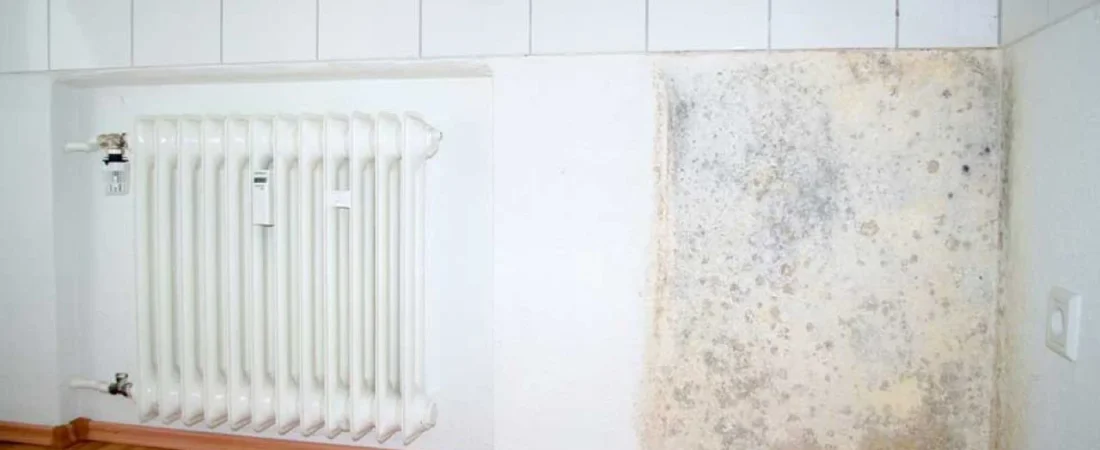
Here’s what almost every article about damp walls in winter gets backwards: the wall itself isn’t the problem. Your heating system is. Specifically, the way you heat your home creates the exact conditions that make moisture condense on cold surfaces — and until you understand that chain reaction, every fix you try will be temporary at best.
What Actually Causes Damp Walls in Winter (It’s Not Rain or Leaks)
Damp walls in winter are almost always a condensation problem, not a water ingress problem. That distinction matters enormously, because the two require completely different solutions — and confusing them is how people spend thousands on waterproofing treatments that do nothing.
Here’s the mechanism: warm indoor air holds a lot of moisture invisibly as water vapor. When that air touches a surface cold enough to drop the air below its dew point — the temperature at which it can no longer hold that vapor — the moisture drops out as liquid water on whatever surface it’s touching. In winter, your exterior walls are that cold surface.
The dew point isn’t a fixed number. It shifts based on how much moisture is actually in your air. At 20°C indoor temperature with 60% relative humidity, the dew point is around 12°C — meaning any wall surface colder than that will attract visible condensation. A poorly insulated exterior wall in a cold snap can easily sit at 8–10°C on its interior face.
Why Do Walls Feel Damp in Winter But Not Summer?
The seasonality confuses people into blaming the weather, but the real driver is what you’re doing indoors. In winter, you seal your home up tight, crank the heat, cook more, shower with hot water, and dry laundry inside — all of which pump moisture into sealed air that has nowhere to go.
Here’s the counterintuitive part: central heating makes this worse, not better. A radiator warms the air in a room, which raises that air’s capacity to hold moisture. You feel warmer and drier. But the walls — especially exterior walls or walls on the north side of a building — don’t warm up at the same rate as the air. So you now have warm, moisture-heavy air pressing against a surface that’s still cold enough to trigger condensation.
Summer doesn’t have this problem because windows are open, internal moisture escapes, and the temperature differential between indoor air and wall surfaces is much smaller. The wall is no longer the coldest object in the equation.
What Is Interstitial Condensation and Why Does It Go Unnoticed?
Surface condensation — the kind you can wipe off with your hand — is the visible version of the problem. But there’s a second type that does far more structural damage without showing up on your radar until it’s serious: interstitial condensation.
This happens inside the wall itself. Warm, humid indoor air migrates through tiny gaps in the wall structure, traveling from the warm interior side toward the cold exterior. Somewhere in the middle — often within the insulation layer or at the back of a cavity — it hits a surface cold enough to condense. The moisture sits trapped inside the wall, soaking into timber, insulation, and masonry with no way to dry out.
You won’t see it on the wall surface until the damage is well advanced. By the time paint starts bubbling or plaster crumbles, the moisture has often been accumulating for a full season or more. This is why apparently “dry” walls can still harbor mold behind plasterboard — the condensation plane is simply further back than the surface you’re touching.
“Most homeowners are treating the symptom — the damp patch they can see — while the real moisture damage is happening at a vapour diffusion boundary inside the wall assembly. Without addressing the dew point location within the structure, remediation is cosmetic at best.”
Dr. Rachel Henley, Building Physicist and Certified Passive House Consultant
How Does Indoor Humidity Level Drive Wall Condensation?
The relative humidity of your indoor air is the single variable you have the most direct control over, and it’s the one most people ignore in favour of buying dehumidifiers after the damage is already visible. Getting ahead of that number is the whole game.
A well-managed home in winter should sit between 40–50% relative humidity. Below 40% and you’ll feel it — dry skin, static electricity, irritated sinuses. Above 55% consistently, and you’re feeding the conditions that produce condensation on cold wall surfaces, especially in rooms with poor air circulation like bedrooms and corner spaces. For a much deeper look at how these numbers shift through the colder months, the guide on Indoor Humidity in Winter breaks down the specific ranges and how to manage them room by room.
A real-world scenario that plays out in thousands of homes every winter: a bedroom with a single-glazed window, heavy curtains drawn close to the wall, and two people sleeping with the door closed. Breathing alone releases roughly 40ml of moisture per person per hour. By morning, the relative humidity in that sealed room can hit 70–75%, and the window and the cold external wall behind the curtain will be visibly wet. The curtain hides it. The mold starts behind the curtain rail.
Which Walls Are Most Likely to Show Winter Dampness?
Not all walls are equally at risk, and knowing which ones to watch tells you a lot about where to focus your attention. The common factor in every high-risk wall is thermal mass combined with poor insulation — the wall gets cold, stays cold, and gives moisture somewhere to land.
- North-facing external walls — they receive little to no direct solar gain, so they stay colder than south-facing walls even on sunny winter days. If you have a north-facing bedroom or living room corner, that’s your highest-risk surface.
- Walls behind large furniture — a sofa or wardrobe pushed flush against an external wall blocks the natural air circulation that would otherwise slightly warm the wall surface. Stagnant cold air pockets form behind the furniture, and condensation follows reliably.
- Solid brick or stone walls without insulation — pre-1920s construction in the UK, for example, typically used solid 225mm brick walls with no cavity and no insulation. These conduct cold from outside to inside efficiently, making the interior face genuinely cold in hard frosts.
- Walls adjacent to unheated spaces — a wall shared with an unheated garage, a cold attic stairwell, or an unoccupied room will behave thermally like an external wall, regardless of where it sits in the floor plan.
- Thermal bridges — structural elements like concrete lintels, steel beams, or window frames that cut through the insulation layer create cold spots on the interior wall surface. Condensation at these points is almost inevitable at high humidity levels, and it often appears as a thin dark line at exactly the structural boundary.
How Is Winter Condensation Different from Rising Damp or Penetrating Damp?
This is where a lot of expensive misdiagnoses happen. Rising damp, penetrating damp, and condensation all produce damp walls — but they have completely different causes, locations, and remedies. Treating one with the solution for another is a reliable way to waste money.
| Type | Where It Appears | Seasonal Pattern | Key Indicator |
|---|---|---|---|
| Condensation | Upper walls, corners, cold spots, window reveals | Worst in winter, often absent in summer | Black mold on surface, tidemark-free |
| Rising Damp | Lower 1m of wall, consistent height | Year-round, may worsen in wet seasons | Horizontal tidemark, salt deposits |
| Penetrating Damp | Localised patches, often near windows, roof, or gutters | Appears or worsens after rainfall | Follows rain events, random location |
Condensation almost never produces a tidemark — that’s the telltale sign of water traveling upward through masonry or horizontally through a defect. Condensation moisture evaporates when conditions improve, leaving surface mold but no mineral staining. Rising damp leaves a distinct horizontal line of salts as the water evaporates and deposits minerals on the wall surface.
One thing worth acknowledging honestly: sometimes you have more than one problem. An older property might have both a failing damp proof course at the base of the wall and condensation issues higher up. Treating one without recognising the other is how remediation fails. A qualified damp surveyor — not a sales rep from a damp-proofing company — can distinguish between them using moisture meters and surface temperature readings rather than a visual guess.
What Role Does Ventilation Play in Keeping Walls Dry in Winter?
Ventilation is where most people’s instincts work against them. In winter, opening a window feels like letting the heat out and the cold in — so people avoid it. But that reluctance traps moisture-laden air indoors, builds up the humidity level, and guarantees worse condensation on the coldest surfaces.
The goal of winter ventilation isn’t to cool the room — it’s to dilute the moisture concentration in your indoor air. Even a 5-minute cross-ventilation session after cooking or showering exchanges enough air to drop humidity significantly without meaningfully cooling the room’s thermal mass. The walls, furniture, and floors hold their heat; the air refreshes.
Mechanical ventilation with heat recovery (MVHR) systems solve this elegantly for new builds — they extract humid air and transfer its heat to incoming fresh air, so you get ventilation without the energy loss. But for most existing homes without MVHR, the practical solution is deliberate, brief, targeted ventilation: bathroom extractor fan running for 20 minutes after every shower, kitchen extractor on during cooking, and bedroom window cracked 10–15mm at night rather than sealed shut.
Pro-Tip: Don’t rely on feeling the air to judge humidity — your perception adjusts to whatever you’re accustomed to. A cheap hygrometer (under £10 from most hardware stores) gives you an actual number. Place one in the bedroom and one in the kitchen, check them in the morning when humidity peaks, and use those readings to decide whether you need more ventilation or a dehumidifier rather than guessing.
Does Insulation Fix Damp Walls in Winter or Make Them Worse?
Insulation is the right long-term answer to condensation on cold walls — but only if it’s specified and installed correctly. Done badly, insulation actually shifts the condensation problem deeper into the wall where it does more damage and is harder to detect.
The logic is sound: if you warm the interior wall surface, you raise its temperature above the dew point, and condensation can no longer form there. Internal wall insulation (dry-lining) or external wall insulation both work on this principle. A well-insulated wall surface that sits at 18°C rather than 10°C is no longer a condensation risk even in a fairly humid room.
The risk comes when insulation is added without a correctly positioned vapour control layer. If warm humid air can still migrate through the insulation and reach the original cold wall behind it, you’ve just moved the condensation plane from the visible surface to inside the insulation — where it destroys the insulation’s effectiveness and rots any timber framing. This is a known problem with some retrofit internal insulation installations, and it’s why the vapour permeability of each layer in the wall assembly needs to follow a deliberate design logic, not just be assembled from whatever materials are cheapest.
What Are the Practical Steps to Reduce Damp Walls in Winter?
Fixing winter wall dampness isn’t one action — it’s a combination of reducing moisture production, improving air exchange, and addressing the cold surfaces that trigger condensation. The good news is that most of the high-impact steps cost very little.
- Move furniture away from external walls — even 50mm of gap between a sofa or wardrobe and the wall allows air to circulate, warms the wall surface slightly, and breaks the stagnant cold pocket that feeds condensation.
- Don’t dry laundry on radiators — a single load of wet laundry releases up to 2 litres of water into your indoor air as it dries. Use a tumble dryer vented outside or hang laundry in a well-ventilated room with the window cracked, not in the bedroom or living room.
- Keep background heating consistent rather than heating intermittently — allowing rooms to cool completely overnight and then heating rapidly creates the worst temperature differential between air and wall surfaces. A lower but steady temperature keeps wall surfaces warmer than a boom-and-bust heating cycle.
- Run extractor fans longer than you think necessary — bathroom humidity doesn’t clear in 5 minutes. Running an extractor for 15–20 minutes after you leave the bathroom actually clears the moisture load; stopping it when you turn the shower off does almost nothing.
- Use a dehumidifier in high-risk rooms — a 10–12 litre per day dehumidifier running in a problem bedroom or lounge can hold relative humidity below 55% even in severe winter conditions. It addresses the moisture concentration directly rather than just moving air around.
- Check and clear trickle vents on windows — many homes have trickle vents built into window frames that are routinely closed in winter to “stop draughts.” These vents exist specifically to provide background ventilation without opening the window; keeping them open provides controlled air exchange that reduces moisture build-up significantly.
Can Heating Patterns Actually Make Wall Dampness Worse?
There’s a pattern that plays out in poorly heated homes — and occasionally in well-meaning energy-saving approaches — that ends up producing worse condensation, not less. Intermittent heating in a cold house keeps wall surface temperatures consistently low while activities like cooking, showering, and breathing continue to add moisture to the air throughout the day.
The wall temperature barely rises when you run heating for two hours in the morning and two in the evening. Air temperature recovers quickly because it has low thermal mass. But a solid brick wall or a plasterboard-clad external wall takes hours to warm meaningfully, and it cools again fast. So for most of the day, you have humid air in a room with cold walls — ideal condensation conditions, even if the room felt warm when the heating was on.
This is why “low and slow” heating — keeping a consistent background temperature of around 16–18°C in all rooms, even unoccupied ones — performs better for wall health than high-temperature intermittent heating. The wall surfaces stay warm enough to stay above the dew point throughout the day, even when moisture is being produced. It’s often more energy-efficient over the full season as well, because you’re not reheating thermally cold rooms from scratch twice daily.
When Should You Call a Professional About Winter Wall Dampness?
Most condensation-related damp walls respond to improved ventilation and humidity management within one to two heating seasons. If yours doesn’t — or if the dampness is accompanied by specific signs — it’s worth getting an expert assessment rather than continuing to throw solutions at a problem you haven’t correctly diagnosed.
Call a professional if you see a horizontal tidemark at consistent height around the base of a wall (possible rising damp), if patches appear specifically after heavy rain and correlate with a roof, gutter, or window above (penetrating damp), or if your walls remain persistently wet despite good ventilation and controlled humidity. These patterns point toward structural issues, not atmospheric ones.
Be cautious about who you call. Damp-proofing companies that offer free surveys have a commercial incentive to find rising damp that requires their injection treatments, regardless of what the wall actually has. An independent building surveyor or a chartered surveyor with damp specialist experience will give you a diagnosis that isn’t tied to a sales outcome. The fee for an independent survey is nearly always less than the cost of a misdiagnosed treatment.
Does Mold on Winter Walls Always Mean a Serious Problem?
Black mold in corners and on cold surfaces in winter is the most visible sign of a condensation problem, but its presence doesn’t automatically mean structural damage or a health emergency requiring complete remediation. Context matters.
Superficial mold on painted plaster in a bathroom corner, a bedroom window reveal, or behind a piece of furniture is typically the result of sustained high humidity rather than a wall defect. Address the humidity, improve the airflow, and the mold doesn’t return. Clean the surface with a mold-killing solution, treat the area with an anti-fungal paint or primer before redecorating, and monitor the humidity going forward.
The situation is different when mold penetrates beyond the paint surface into plaster or appears on multiple surfaces across different rooms despite reasonable humidity management. That can indicate either interstitial condensation bringing moisture through from inside the wall assembly, or a different moisture source entirely. At that point, surface cleaning is genuinely insufficient and a structural assessment is the appropriate next step.
One honest nuance here: mold species vary in their health implications, and what looks like superficial black mold on a surface may include species that are more problematic than others. If occupants are experiencing unexplained respiratory symptoms, fatigue, or persistent allergy-like reactions, getting an air quality test alongside the structural assessment is reasonable — not because damp walls always cause serious health issues, but because the combination of symptoms and visible mold warrants investigation rather than assumptions either way.
Conclusion
Damp walls in winter are almost universally misdiagnosed as a building defect when they’re actually a physics problem — one that worsens as homes are sealed more tightly for energy efficiency without equivalent improvements to ventilation. As insulation standards improve and buildings become more airtight, managing indoor moisture isn’t going to become less relevant; it’s going to become the central challenge of healthy home management. The homes that handle winter humidity well won’t necessarily be the newest or the most expensively renovated — they’ll be the ones where the occupants understand the relationship between their behaviour, their air, and their walls, and make small, consistent adjustments throughout the season rather than reacting to the damage after it appears.
Frequently Asked Questions
Why do walls feel damp in winter?
Because cold surfaces slow evaporation and encourage moisture retention.
Are damp walls in winter normal?
Yes, especially on exterior walls.
Do damp winter walls mean leaks?
Not usually. They are often condensation-related.
Why are damp walls worse behind furniture in winter?
Because airflow and heat circulation are reduced.
Will damp walls improve after winter?
Often yes, as walls warm and dry faster.