

You’re standing in front of three air purifier brands — Levoit, Coway, and Blueair — and every review you’ve read so far either reads like a spec sheet or suspiciously sounds like it was written by someone who’s never actually lived with one of these machines. You don’t just want to know which filter is which. You want to know which brand actually delivers cleaner air in a real apartment, handles real-world smells and particles, and doesn’t drive you insane with noise or a confusing app. That’s exactly what this comparison covers: how these three brands differ in filtration philosophy, real-world performance, value, and the situations where each one genuinely shines — or quietly disappoints.
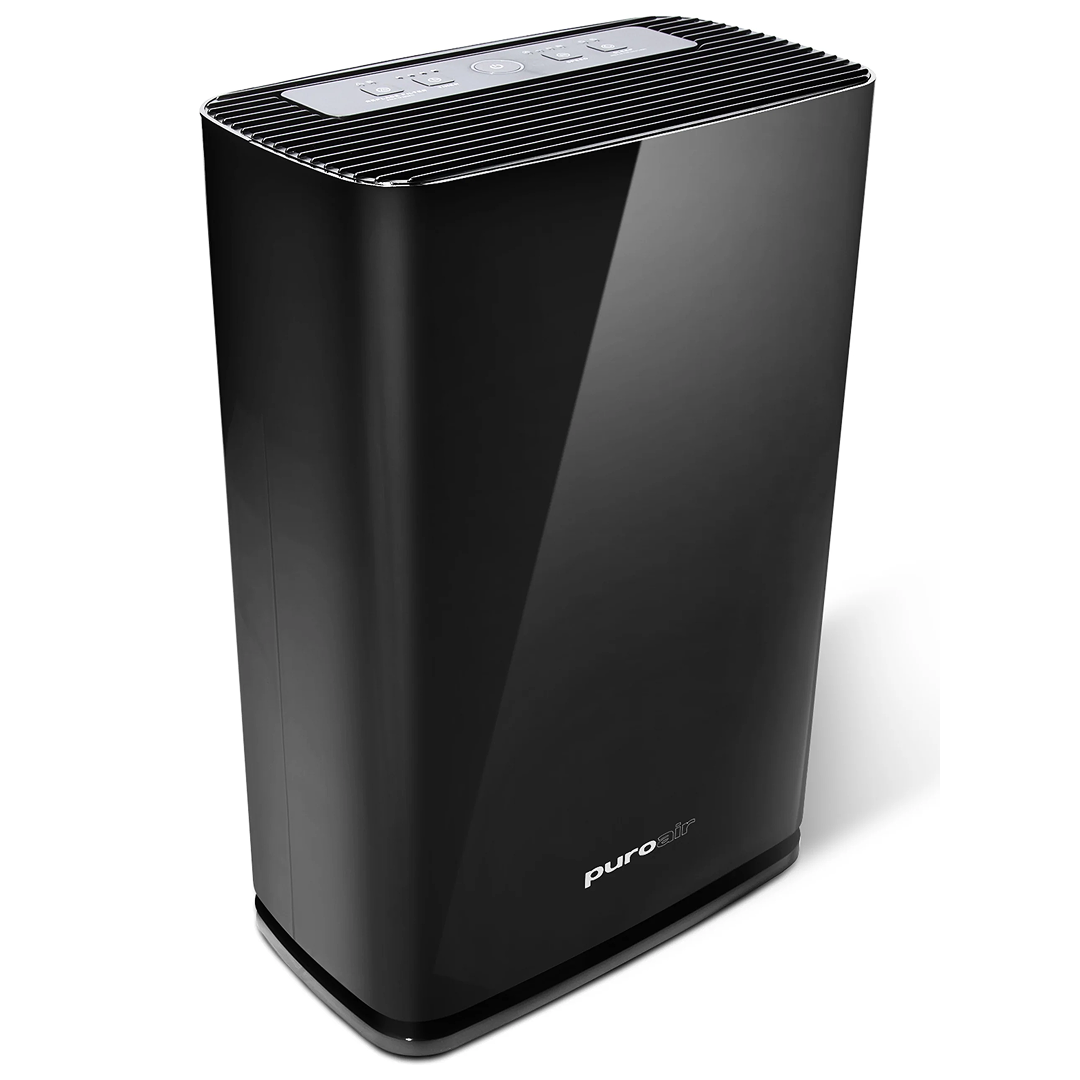
PuroAir 400 — HEPA 14 Air Purifier
- Covers large rooms up to 2,145 sq ft
- World’s first HEPA 14 filter — removes 99.995% of particles
- Auto air quality sensor · whisper-quiet · free shipping
- 100-day money-back guarantee · trusted by 900,000+ customers
We may earn a small commission if you buy through this link — at no extra cost to you.
How Levoit, Coway, and Blueair Actually Filter Air Differently
Most people assume all air purifiers do the same thing — push air through a HEPA filter and call it a day. But the filtration architecture between these three brands is meaningfully different, and those differences matter depending on what you’re trying to remove from your indoor air. Levoit uses a three-stage system: a pre-filter, a true HEPA layer (H13 grade on most models), and an activated carbon filter layered together in a single cylindrical unit. This integrated design keeps costs down and replacement simple, but it does mean you’re replacing the whole unit at once — usually every 6 to 8 months — rather than swapping individual stages.
Coway takes a slightly different approach with its Airmega line, using a separate washable pre-filter combined with a Green True HEPA filter and an activated carbon layer. The washable pre-filter is a small but real advantage — it extends the life of the main filter by catching larger particles before they clog the HEPA layer. Blueair, meanwhile, splits into two distinct technologies depending on the model line: its Classic and Pro series use HEPASilent technology, which combines mechanical filtration with electrostatic charging to capture particles at lower air resistance, allowing faster airflow at quieter fan speeds. Their Blue Pure series adds a fabric pre-filter wrap that doubles as a design element and a dust collector. These aren’t trivial differences — the electrostatic component in Blueair’s HEPASilent tech means it can capture particles down to 0.1 microns with tested efficiency above 99.97%, while running quieter than a purely mechanical equivalent.


PuroAir 240 — HEPA Air Purifier
- Ideal for bedrooms and rooms up to 240 sq ft
- Captures 99.9% of airborne pollutants including mold spores
- Whisper-quiet sleep mode — won’t disturb your rest
- 100-day money-back guarantee · trusted by 900,000+ customers
We may earn a small commission if you buy through this link — at no extra cost to you.
CADR Ratings, Room Coverage, and What the Numbers Actually Mean
CADR — Clean Air Delivery Rate — is the standardized metric that tells you how much filtered air a purifier delivers per minute, measured in cubic feet per minute (CFM) for smoke, dust, and pollen separately. It’s the most honest number in this space, and the differences between these brands are worth understanding. Levoit’s Core 400S delivers a smoke CADR of around 260 CFM, covering rooms up to approximately 403 square feet at 4.8 air changes per hour. Coway’s AP-1512HH — its most popular model — comes in at a smoke CADR of 246 CFM for spaces up to 360 square feet. Blueair’s Blue Pure 211+ hits a smoke CADR of 350 CFM, covering up to 540 square feet, which is one of the highest in its price range.
Here’s the honest nuance that most comparison articles skip: CADR alone doesn’t tell you how a purifier performs in a real room. Room geometry, ceiling height, furniture placement, and where you actually put the unit all affect real-world air cleaning times. A 400 CFM machine placed in the corner behind a couch will consistently underperform a 250 CFM machine placed in the center of a room with clear 360-degree airflow. If you’re trying to get the most out of whichever brand you choose, understanding how placement affects actual room coverage will have more impact on your air quality than a 50 CFM difference in CADR ratings. Most people don’t think about this until they’ve already been running their purifier for months and wondering why it doesn’t seem to do much.
Noise Levels, Smart Features, and Living With Each Brand Day to Day
The spec you’ll never regret paying attention to is noise. At sleep or low speed, the differences between these brands become the most tangible part of owning one. Blueair’s HEPASilent technology gives it a genuine structural advantage here — the Blue Pure 211+ runs at approximately 31 dB on its lowest setting, which is barely above ambient room noise in a quiet apartment. Levoit’s Core series models typically sit between 24 and 48 dB across their speed range, with the lowest setting genuinely whisper-quiet at around 24 dB on newer models. Coway’s AP-1512HH runs at about 24.4 dB on low as well, though its high speed hits 53.8 dB — noticeably louder than the others at max output, which matters if you’re in a smaller space and need it to work hard during cooking or high-pollution events.
On the smart features front, Levoit has leaned hardest into app integration. The VeSync app gives you scheduling, auto mode tied to a built-in air quality sensor, filter life tracking, and voice control via Alexa or Google Home. It’s a polished ecosystem, especially if you already use other VeSync devices. Coway’s Airmega models also offer Wi-Fi connectivity and real-time air quality monitoring through the Coway app, but their entry-level AP-1512HH remains app-free — which some people genuinely prefer for simplicity. Blueair’s app is functional but gets more mixed reviews for stability and interface design; it works, but it’s not as refined as Levoit’s. Where Blueair wins on smart features is its auto mode response speed — the air quality sensors on Airmega and Blueair models both react to detected particles within 60 to 90 seconds, kicking the fan up before you’ve even registered a smell. That kind of reactive performance matters when someone’s frying fish at 7pm.
Filter Replacement Costs and the True Cost of Ownership
This is where the real comparison lives, and it’s the one most buyers ignore until they’re staring at a $70 replacement filter 8 months after purchase. Let’s put actual numbers on it. Levoit filter replacements for the Core 400S run approximately $25 to $30 per filter, with recommended replacement every 6 to 8 months depending on usage and air quality — putting annual filter costs at roughly $40 to $60. Coway’s AP-1512HH replacement filters cost around $20 to $25, and because the washable pre-filter extends the HEPA layer’s life, many users report stretching replacements to 12 months. Annual cost: closer to $25 to $35. Blueair’s Blue Pure 211+ replacement filters run $40 to $50 per unit, and the fabric pre-filter wrap (which is washable but does eventually need replacing) adds another $15 to $20 periodically. Annual filter costs land around $50 to $70 for heavy users.
Add it up over three years and the spread becomes significant. Levoit costs roughly $120 to $180 in filters over three years. Coway runs $75 to $105. Blueair reaches $150 to $210. None of these are ruinous, but if you’re running multiple units across an apartment — which is a legitimate strategy in larger spaces — the multiplier effect adds up fast. When you’re comparing dehumidifier brands with a similar eye toward long-term costs, the same principle applies: the unit price is only part of the story. The Coway wins on three-year cost of ownership, but not by such a margin that it should be the only deciding factor. What should shift your decision more is which brand handles your specific primary air quality concern most effectively.
Pro-Tip: Before buying replacement filters, check if the brand sells multi-packs — Levoit and Coway both offer 2-pack filter bundles that reduce per-filter cost by 15 to 20%, and buying ahead means you won’t delay a replacement because you forgot to order. A filter running 2 to 3 months past its change date can lose up to 30% of its particle capture efficiency as the activated carbon saturates.

PuroAir HVAC Mega Filter — MERV 13
- Captures dust mites, mold spores and allergens
- MERV 13 + activated carbon — dual filtration
- Designed for optimal airflow · fits any HVAC system
- Free shipping always · easy DIY installation
We may earn a small commission if you buy through this link — at no extra cost to you.
Which Brand Is Best for Specific Air Quality Problems
This is the question that actually matters. Not “which is best overall” but which performs best for your situation. Here’s how they stack up across the most common indoor air quality scenarios apartment dwellers actually face, based on filtration specs, CADR performance, and the underlying mechanisms of each brand’s design.
- Pet dander and allergens: Coway AP-1512HH is the standout here. Its Green True HEPA filter captures particles as small as 0.3 microns at 99.97% efficiency, and the washable pre-filter catches pet hair before it clogs the main filter — meaningfully extending performance between replacements. If pet dander is your primary concern, the Coway’s combination of filtration quality and low ongoing cost makes it the most practical long-term choice.
- Cooking odors and VOCs: Levoit wins on activated carbon volume in its mid-range and premium models. The Core 600S uses a carbon filter with 360-degree air intake and a higher volume of activated carbon than most comparably priced Coway or Blueair units, which translates to better odor adsorption over time. If you cook frequently and live in an open-plan apartment where kitchen smells migrate through the space, Levoit’s carbon filtration holds up better through repeated high-odor events.
- Wildfire smoke and fine particle events: Blueair’s Blue Pure 211+ is the strongest performer here, driven by its high CADR (350 CFM for smoke) and HEPASilent technology that handles the ultrafine particles in smoke — many of which are below 0.3 microns — more effectively than standard mechanical HEPA alone. During smoke events, you want maximum air throughput at a filtration level that captures particles down to 0.1 microns. Blueair’s electrostatic assist gives it a real edge in this scenario.
- Dust mite allergens and bedroom use: All three brands handle dust mite allergens (which shed as particles between 1 and 10 microns) well with true HEPA filtration. But for bedroom use specifically, Blueair and Levoit’s quietest sleep modes — both achieving around 24 to 31 dB — make them more livable at night than running a Coway on anything above its lowest setting. If you’re sensitive to both dust and noise, Levoit’s Core 300S at around $100 is a remarkably quiet bedroom option.
- Mold spores: All three brands capture mold spores effectively — spores range from 1 to 30 microns, well within true HEPA capture range. The more meaningful consideration is whether you’re addressing the humidity source driving mold growth at the same time. An air purifier removes airborne spores; it doesn’t prevent new ones from forming at the source. Just as choosing between different dehumidifier brands involves matching specs to your moisture problem, picking an air purifier for mold means pairing it with humidity control, not substituting for it.
- Small apartments under 300 square feet: Levoit Core 300S is difficult to beat here on a pure value basis — under $100, genuine H13 HEPA filtration, multiple filter variants (including a toxin absorber option), and quiet enough for a studio bedroom. The Coway AP-1512HH also covers this space effectively, but it’s physically larger than necessary for a single room. Blueair’s smaller Blue Pure 411+ exists in this category but runs at a slightly higher price point for comparable coverage.
Understanding which scenario matches your actual living situation will do more to guide your purchase than any overall ranking. The honest answer is that all three brands make genuinely good purifiers — the differences are real but not enormous across the mid-range models where most buyers land.
Side-by-Side Specs: Key Models Compared
To make the comparison concrete, here’s a direct look at the most popular mid-range model from each brand — the ones that represent each company’s best balance of performance and price, and the models most buyers actually end up choosing.
| Feature | Levoit Core 400S | Coway AP-1512HH | Blueair Blue Pure 211+ |
|---|---|---|---|
| Smoke CADR (CFM) | 260 | 246 | 350 |
| Room Coverage (sq ft) | ~403 | ~360 | ~540 |
| Noise (low / high dB) | 24 / 52 | 24.4 / 53.8 | 31 / 56 |
| Filter Type | H13 HEPA + carbon (integrated) | True HEPA + carbon + washable pre-filter | HEPASilent + carbon + fabric pre-filter |
| Annual Filter Cost (approx.) | $40–$60 | $25–$35 | $50–$70 |
| Wi-Fi / App Control | Yes (VeSync) | No (base model) | Yes (Blueair app) |
| Street Price (approx.) | $130–$150 | $100–$120 | $150–$180 |
A few things jump out from this comparison. Blueair’s Blue Pure 211+ covers significantly more square footage per dollar than either competitor when you look at CADR-to-price ratio — if you have a large open-plan living area, that gap is real. But Coway’s dramatically lower annual filter cost starts to close that gap over two to three years of ownership. And Levoit’s app integration is genuinely better than Blueair’s for people who want scheduling and smart home connectivity without fighting with a finicky interface.
“The brands that consistently perform well in independent testing tend to be the ones with the highest actual carbon mass in their filters, not just the ones with the most marketing around ‘odor removal.’ Activated carbon performance degrades as it saturates — usually within 3 to 6 months in a kitchen or high-VOC environment — so filter replacement discipline matters far more than which brand name is on the box.”
Dr. James Fenwick, Environmental Health Scientist, Indoor Air Quality Research Consortium
PuroAir 240
HEPA Air Purifier
Best for
Bedrooms, nurseries, small offices
PuroAir 400
HEPA 14 Air Purifier
Best for
Living rooms, mold & allergy sufferers
We may earn a small commission if you buy through these links — at no extra cost to you.
What to Look for Beyond the Brand Name
Brand loyalty in the air purifier space is, frankly, a bit misplaced. What actually determines whether an air purifier improves your indoor air quality comes down to a handful of factors that apply regardless of which of these three brands you choose. Getting these right matters more than the brand decision itself.
- Actual filter grade, not marketing language: “True HEPA” and “HEPA-type” are not the same thing. True HEPA (H13) captures 99.97% of particles at 0.3 microns. HEPA-type filters — sometimes labeled as such on lower-end models — may only achieve 85 to 95% efficiency at the same particle size. Always check whether the filter is rated H13 or higher before buying.
- Activated carbon weight, not just presence: A filter with 50 grams of activated carbon will saturate significantly faster than one with 200 grams. Brands rarely advertise this spec, but it’s available in product documentation or third-party teardowns. Low carbon mass is why some purifiers seem to stop handling odors after a few months even though the HEPA filter still looks clean.
- Air changes per hour (ACH) for your room size: For allergy or asthma management, you want at least 4 to 5 air changes per hour in the target room. For general air quality maintenance, 2 to 3 ACH is adequate. Calculate this by dividing CADR (in CFM) by room volume (length × width × ceiling height in cubic feet), then multiplying by 60.
- Ozone output: Some air purifiers — particularly those using ionizers or UV-C components — generate ozone as a byproduct. Ozone above 0.05 ppm can irritate airways and worsen asthma. All three brands tested here have models with optional ionizer features; for sensitive individuals, it’s worth disabling or avoiding ionizer functions and sticking to pure HEPA filtration.
- Energy consumption at realistic running speeds: An air purifier running 24 hours a day on medium speed has a different annual electricity cost than the spec sheet’s “max speed” figure implies. Levoit Core 400S draws about 22W on medium — roughly $19 per year at average US electricity rates. Blueair Blue Pure 211+ draws about 30W on medium — around $26 annually. These are not dramatic differences, but they’re worth knowing for a device you’ll run constantly.
None of these factors favor one brand categorically over the others. Levoit, Coway, and Blueair all have models that score well on each criterion — the key is matching the specific model’s specs to your specific needs, not just buying the brand with the best marketing presence.
If you’re choosing between Levoit, Coway, and Blueair for indoor air quality in an apartment, here’s the honest summary: Coway wins on long-term cost of ownership and is ideal for allergy-focused buyers in small to medium rooms. Blueair wins on raw CADR performance and quiet operation through HEPASilent technology — it’s the best choice for larger spaces or smoke-related air quality concerns. Levoit wins on ecosystem integration, price-to-performance ratio in its mid-range models, and sheer variety — there’s a Levoit for almost every room size and use case. None of these brands make a bad purifier in their core lineup. The one that’s best for you is the one that matches your room size, your primary air quality concern, and the filter replacement budget you’ll actually stick to over the next two to three years. Buy the wrong size for your room, put it in the wrong spot, and even the best brand will underdeliver. Get those basics right, and any of these three will genuinely improve the air you’re breathing.
Frequently Asked Questions
Which is better for allergies: Levoit, Coway, or Blueair?
Coway and Blueair both edge out Levoit for severe allergy sufferers. Coway’s AP-1512HH uses a 4-stage filtration system that captures particles down to 0.3 microns at 99.97%, while Blueair’s HEPASilent technology handles both particles and gases simultaneously. Levoit’s Core 300 is solid for mild allergies, but if you’re dealing with serious pet dander or pollen issues, Coway or Blueair will serve you better.
Is Levoit or Coway cheaper to maintain long-term?
Levoit wins on upfront cost, but Coway’s filter replacement costs are actually pretty competitive over time. Levoit replacement filters typically run $15–$25 every 6–8 months, while Coway filters cost around $30–$50 but last up to 12 months. Blueair is the most expensive to maintain, with some filters hitting $70–$100 per replacement.
Which air purifier brand is quietest — Levoit, Coway, or Blueair?
Blueair is hands-down the quietest of the three, with most models operating at 17–32 dB on the lowest setting thanks to their HEPASilent tech. Levoit is a close second, with sleep modes on models like the Core 300 dropping to around 24 dB. Coway is still quiet but generally runs 30–40 dB, which is noticeable in a silent bedroom.
Which brand covers the largest room — Levoit vs Coway vs Blueair?
Blueair covers the most square footage per dollar at the higher end, with models like the Blue Max 3350i rated for up to 1,526 sq ft. Coway’s Airmega 400 handles rooms up to 1,560 sq ft, making it the strongest competitor for large spaces. Levoit’s mid-range models max out around 400–500 sq ft, so it’s better suited for bedrooms or small offices rather than open floor plans.
Does Blueair actually perform better than Levoit and Coway?
Blueair’s filtration performance is genuinely top-tier, especially for ultrafine particles and smoke, but whether it’s ‘better’ depends on your budget and priorities. For most households, Coway delivers comparable real-world air quality results at a significantly lower price point. Levoit is the budget-friendly pick that still gets the job done for everyday dust, pet hair, and mild pollutants — it just doesn’t match Blueair’s performance in high-pollution environments.