
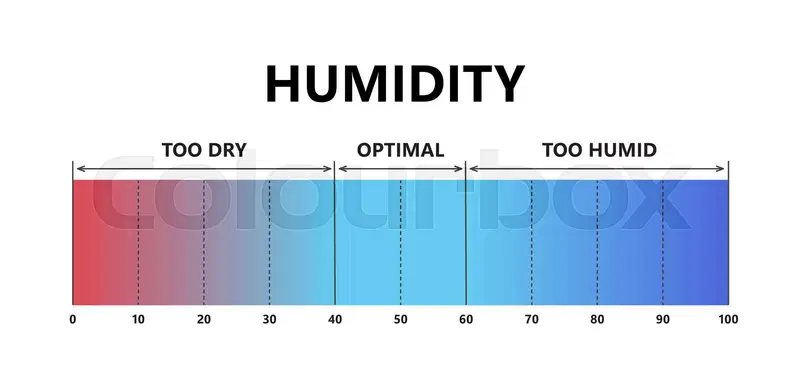
Bottom line: The problem isn’t whether your indoor humidity is too high or too low — it’s that most people treat them as opposite problems requiring opposite solutions, when they’re actually two symptoms of the same root issue: poor moisture control. Get that wrong, and you’ll keep bouncing between a clammy house in summer and a cracked-lip, static-shock nightmare in winter.
The sweet spot is 40–60% relative humidity (RH). Below 30%, you’re in dry territory. Above 60%, you’re feeding mold, dust mites, and wood rot. That 30-point range in the middle is where your home, your lungs, and your furniture all coexist without drama.
What this article gets into — and what most humidity guides completely skip — is the mechanism behind each extreme. Not just “buy a humidifier” or “run the dehumidifier,” but why humidity behaves differently room by room, season by season, and even hour by hour inside your home.
What Is Indoor Humidity and Why Does the Number Actually Matter?
Relative humidity is the percentage of moisture in the air compared to the maximum it can hold at that temperature. Warm air holds more water vapor than cold air — that’s the physics behind why your windows fog up in winter and why a hot shower turns your bathroom into a sauna.
Here’s what that means practically: a reading of 50% RH at 70°F contains nearly double the actual water content of 50% RH at 50°F. So the same number on your hygrometer can mean very different things depending on your indoor temperature. That’s why “just check the humidity level” is incomplete advice without factoring in where and when you’re measuring.
The number matters because humidity directly affects how your body thermoregulates, how building materials expand and contract, and whether microbial life can take hold on your surfaces. It’s not a comfort metric — it’s a building health metric that happens to affect you too.
Low vs High Indoor Humidity: What’s the Core Difference?
At their core, low vs high indoor humidity represent two failure modes of moisture management, not just two points on a dial. Low humidity is a deficit problem — the air is pulling moisture from every available source: your skin, your nasal membranes, your wooden floors, your houseplants. High humidity is a surplus problem — the air is saturated, moisture is condensing on cool surfaces, and biological growth gets a foothold.
The counterintuitive part: both conditions can exist in the same home simultaneously. A basement might read 70% RH while the upstairs bedroom sits at 28% in February. That’s not unusual — it’s actually the norm in many homes with forced-air heating and minimal air sealing.
One key distinction most guides gloss over is time sensitivity. High humidity damage (mold, structural rot) can begin within 24–48 hours of sustained exposure above 60%. Low humidity damage is slower and cumulative — wood contracts over weeks, respiratory membranes dry out gradually. That asymmetry changes how urgently you need to act in each case.
| Factor | Low Humidity (Below 30% RH) | High Humidity (Above 60% RH) |
|---|---|---|
| Main risk timeline | Weeks to months (cumulative) | 24–48 hours (acute onset) |
| Primary physical damage | Wood cracking, static buildup, paint peeling | Mold growth, rust, structural rot |
| Health impact | Dry airways, increased virus transmission | Dust mite proliferation, respiratory irritation |
| Fix complexity | Add moisture (humidifier, plants, open water) | Remove moisture (dehumidifier, ventilation, fix leaks) |
What Does Low Indoor Humidity Actually Do to Your Home and Body?
Dry air is a thief. It extracts moisture from wood furniture, hardwood floors, musical instruments, and even the framing inside your walls. Gaps appear between floorboards. Door frames warp slightly, making doors stick or swing open on their own. Paint develops hairline cracks. None of this is catastrophic on its own, but over a season or two it adds up to visible, sometimes irreversible damage.
For your body, the effects are more immediate. Your nasal passages and throat are lined with mucous membranes that rely on moisture to function as a barrier against airborne pathogens. Below 30% RH, those membranes dry and crack, making you significantly more susceptible to respiratory infections. Studies on influenza transmission consistently show higher viral survival rates in low-humidity environments — the virus essentially lasts longer in dry air.
There’s also the static electricity issue, which sounds minor but isn’t if you’re working with electronics. At 20% RH, a person walking across carpet can generate up to 35,000 volts of static — enough to damage sensitive components through electrostatic discharge. Keeping humidity above 40% drops that figure dramatically.
One scenario that catches people off guard: forced-air heating systems are humidity destroyers. When your furnace pulls in cold outdoor air (which holds very little moisture to begin with) and heats it to 70°F, the relative humidity of that air can drop below 15%. You’re essentially living inside a very warm desert for months.
What Does High Indoor Humidity Actually Do to Your Home and Body?
Above 60% RH, your home becomes a hospitable environment for things you don’t want as roommates. Mold spores — which are always present in indoor air at low concentrations — need three things to colonize: a surface, a food source, and moisture. High humidity provides that third ingredient. Once established, mold colonies release mycotoxins and additional spores that degrade air quality and can cause serious respiratory issues.
Dust mites are the other population boom you don’t want. These microscopic arthropods thrive at humidity levels above 50% and reproduce rapidly above 70%. Their waste particles are a leading trigger for asthma and allergic rhinitis. For detailed signs you’re already dealing with this: check out the documented high indoor humidity symptoms that appear both in your body and your home before mold becomes visible.
Structurally, persistent high humidity causes wood to swell and eventually rot, metal fasteners to rust, and insulation to lose its thermal effectiveness. Condensation on windows is an early warning sign — when warm indoor air hits a cool glass surface, moisture drops out of suspension and pools on the sill, which then soaks into surrounding wood framing.
The health picture is complicated, and this is worth being honest about: some people with certain respiratory conditions actually feel better at slightly higher humidity (around 55–60%) because their airways stay moist. The tradeoff is biological growth risk. There’s no universally perfect number — it depends on your climate, your home’s construction, and your specific health profile.
“Most homeowners focus on temperature and completely ignore moisture, which is the bigger driver of both comfort and indoor air quality. I’ve seen wood floors buckle, mold establish itself inside wall cavities, and allergy symptoms persist for years — all because humidity was 15 percentage points off in the wrong direction. The damage is always slow enough that people attribute it to something else.”
Dr. Sandra Hirsch, Certified Industrial Hygienist and Indoor Environmental Quality Consultant
How Do You Know Which Problem You Have Without Guessing?
A digital hygrometer costs between $10 and $25 and removes all the guesswork. You can’t accurately assess humidity by feel alone — humans are notoriously bad at estimating RH, especially in the 35–55% range where conditions feel “fine” even when they’re drifting toward problematic. Place one in each main area of your home: living room, bedroom, basement, and if you have persistent issues, inside a closet against an exterior wall.
Take readings at different times of day. Humidity fluctuates — morning readings in a bedroom after 8 hours of two people sleeping can run 5–10% higher than midday readings in the same room. If you’re only checking once, you might be catching an unrepresentative snapshot.
Look for physical clues too. Condensation on interior windows in winter = high humidity. Gaps opening between hardwood floorboards in winter = low humidity. A musty smell that gets stronger after rain = moisture intrusion from outside contributing to high humidity. Frequent nosebleeds or cracked lips during heating season = almost certainly low humidity.
Pro-Tip: Place a hygrometer near your return air vent and another near an exterior wall. The difference between the two readings tells you a lot about where moisture is entering or leaving your home — a gap of more than 10% between readings usually points to a specific air sealing or ventilation problem worth investigating.
What Causes Low Indoor Humidity (And Why Winter Heating Is the Main Culprit)?
Winter is low humidity season in most temperate climates, and the mechanism is straightforward once you see it. Cold outdoor air has a very low absolute moisture content — air at 32°F and 80% RH contains only about a quarter of the water vapor that 70°F air at 50% RH holds. When that cold air infiltrates your home and gets heated to room temperature, its relative humidity plummets without any additional drying — the air just has more capacity than the moisture it carries.
Forced-air heating compounds this by circulating large volumes of that now-dry heated air throughout the house continuously. Each cycle pushes out whatever humidity your interior activities (cooking, showering, breathing) have added. Older homes with single-pane windows and poor insulation have high air exchange rates, meaning the outside dry air is constantly refreshing the interior.
Other low-humidity contributors include over-ventilation (running exhaust fans longer than necessary), air conditioning in summer (AC removes moisture as a byproduct of cooling), and simply living in an arid climate where even outdoor summer air is dry. High-altitude locations compound the problem — Denver, for instance, sits at over 5,000 feet where the air holds less moisture at any given temperature.
What Causes High Indoor Humidity (And Why the Source Matters More Than the Fix)?
High indoor humidity almost always has a source — and identifying that source is more important than running a dehumidifier. A dehumidifier without source control is like bailing out a boat without plugging the hole. You’ll exhaust the machine and the problem will persist the moment you turn it off.
Common moisture sources include: ground moisture migrating through a concrete slab or crawl space (very common and wildly underdiagnosed), plumbing leaks inside walls, inadequate bathroom and kitchen exhaust ventilation, and outdoor air infiltration during humid weather. In some climates, simply leaving windows open on a humid summer evening can push interior humidity up 10–15% within a few hours.
Human activity generates more moisture than most people realize. A typical person exhales about a pint of water vapor per day through breathing alone. Cooking, showering, doing laundry indoors — these add several more pints. In a tightly sealed, energy-efficient modern home without adequate mechanical ventilation, that moisture has nowhere to go. This is the irony of well-insulated homes: they trap moisture as effectively as they trap heat.
How to Fix Low Indoor Humidity: Ranked by Effectiveness
- Whole-house humidifier (bypass or fan-powered): Connects to your HVAC system and automatically adds moisture to all distributed air. This is the most consistent solution for homes with forced-air heating — it maintains RH within a set range without requiring you to refill tanks or manage multiple units. Expect to pay $300–$700 for the unit plus installation.
- Console evaporative humidifier: The best standalone option for large spaces. An evaporative unit uses a wick and fan rather than heating water, which means it’s self-regulating — once the air is saturated, evaporation slows naturally. This prevents over-humidification, which is a real problem with ultrasonic units in smaller rooms.
- Ultrasonic humidifier: Quiet and efficient for bedrooms, but requires distilled water to prevent mineral dust buildup. The white powder residue you see on surfaces near these units is calcium from tap water — it’s not harmful, but it coats everything nearby and clogs the unit over time.
- Passive moisture sources: Houseplants transpire water, and a collection of 10–15 plants in a medium-sized room can meaningfully contribute to humidity levels. Leaving the bathroom door open after showering, drying laundry indoors seasonally, and keeping pots of water on radiators are all low-tech but genuinely effective for modest deficits.
- Air sealing: Reducing cold air infiltration through weatherstripping, caulking window frames, and sealing attic bypasses reduces the volume of dry outdoor air entering the home. This is the efficiency play — less incoming dry air means your humidifier (or passive sources) have to do less work to maintain target RH.
How to Fix High Indoor Humidity: What to Address and in What Order
Start with source control before you reach for equipment. Walk through your home and identify where moisture is entering: check under sinks for slow drips, feel basement walls for cold sweating surfaces, look at bathroom exhaust fans (hold a tissue up — if it doesn’t flutter strongly, the fan isn’t pulling enough air). Fix what you find before spending money on dehumidifiers.
Ventilation is often the lowest-cost intervention. Kitchen and bathroom exhaust fans should run for at least 20 minutes after cooking or showering — most people turn them off as soon as they leave the room, but the moisture load doesn’t clear that fast. A timer switch for bathroom fans costs about $15 and pays for itself in reduced humidity almost immediately.
Here’s what most guides don’t tell you about dehumidifiers: sizing matters enormously. A 30-pint unit working hard in a 1,500 sq ft basement is going to run continuously and never hit its target. Dehumidifier capacity is rated in pints per day — for a very damp 1,000 sq ft space, you need at least a 50-pint unit. Undersizing leads to overworked equipment, higher energy bills, and a humidity level that never actually stabilizes.
Crawl space encapsulation deserves a mention because it’s often the hidden driver of whole-home humidity problems. An unencapsulated dirt crawl space under a house acts as a constant moisture source — ground moisture evaporates into the crawl, rises into the living space, and no amount of dehumidification upstairs fixes it. A vapor barrier and proper crawl space sealing can drop whole-home humidity by 10–15 percentage points permanently.
Which Is More Dangerous: Low or High Indoor Humidity?
High humidity wins on urgency, but low humidity wins on subtlety. Mold can establish visible colonies within a week of sustained high humidity and produce health-affecting spore counts within days after that. The structural damage from moisture infiltration — rot, rust, swelling — can render building materials permanently compromised relatively quickly.
Low humidity’s danger is that it operates below the threshold of obvious damage for a long time. You might not notice that your hardwood floors have developed permanent gaps until the next humid season when they close slightly and then don’t quite go back to their original positions. Respiratory effects accumulate. People with asthma, COPD, or eczema often find their conditions worsen measurably through a dry heating season without ever connecting it to indoor RH.
The honest answer is: it depends on your situation. A healthy adult with no respiratory conditions, no wood instruments, and no allergies is going to weather a dry winter without catastrophic consequences. A household with young children, asthma sufferers, expensive wood furniture, or a basement prone to moisture intrusion needs to take both extremes much more seriously. Context determines risk — there’s no universal ranking that applies to every home.
What Humidity Level Should You Actually Target in Your Home?
The EPA recommends keeping indoor humidity between 30% and 50%. ASHRAE (the professional body for heating and ventilation engineers) extends that to 60% as an acceptable upper limit in some conditions. The practical target most building scientists land on is 40–50% — comfortable for humans, below the threshold for dust mite reproduction to accelerate sharply, and within the safe range for most wood products and building materials.
In very cold climates, targeting 40% in winter isn’t always achievable without condensation issues on windows and exterior walls. When outdoor temperatures drop below 0°F, even double-pane windows can form frost at interior humidity levels above 35%. In those situations, the practical winter target shifts to 30–35% — not ideal for comfort, but safer for your windows and wall assemblies.
Use this as a practical guide:
- Below 20% RH: Immediate action needed — significant health and structural risk
- 20–30% RH: Low but manageable short-term; add humidity sources
- 30–50% RH: Target zone — optimal for health and materials
- 50–60% RH: Acceptable but monitor closely, especially in basements
- Above 60% RH: Act quickly — mold and dust mite conditions are active
How Long Does It Take to Correct Indoor Humidity Levels?
This depends heavily on the size of your space, how far off your current RH is, and what equipment you’re using. A properly sized dehumidifier in a 500 sq ft basement starting at 75% RH can typically bring levels to 50% within 8–12 hours under normal conditions. A whole-house humidifier connected to a forced-air system can raise RH by 10–15 percentage points within a full heating cycle or two.
What slows the process: continuous moisture input (an ongoing leak, an unencapsulated crawl, steam from cooking without ventilation), an undersized unit, or significant air exchange with outdoors. A room with a window cracked even slightly during humid weather makes dehumidification essentially an open-ended task — you’re fighting an infinite moisture source.
The realistic timeline for stabilizing humidity after fixing the root cause (sealing a leak, insulating a crawl space, installing proper ventilation) is typically 1–3 days for significant shifts and several weeks for a home that’s been chronically wet to fully dry out structurally. Patience matters here — and so does continued monitoring to make sure the fix actually held.
Does Outdoor Humidity Directly Affect Indoor Levels?
Yes, but not always in the direction you’d expect. In summer, a humid exterior pushes moisture inward whenever windows are open or air infiltrates through gaps in the building envelope. Closing windows and running AC actually helps manage this — the AC removes moisture from the air as it cools it, and a closed building limits the outdoor moisture load.
In winter, cold dry outdoor air lowers indoor humidity when it infiltrates — which is why older, leakier homes are typically drier in winter than newer ones. The perverse outcome is that spending money on air sealing (generally considered an energy-efficiency improvement) also directly improves winter humidity retention, reducing the load on your humidifier and your heating system simultaneously.
Frequently Asked Questions
Is low indoor humidity common in apartments?
Yes. Low humidity is especially common in winter due to heating and cold outdoor air.
Is high indoor humidity more dangerous than low?
High humidity is more likely to cause visible moisture problems, but both extremes can reduce comfort.
Can an apartment have both low and high humidity?
Yes. Different rooms or seasons can experience opposite humidity issues.
Does normal humidity feel the same to everyone?
No. Comfort levels vary, even within the normal humidity range.
Should indoor humidity stay the same all year?
No. Some seasonal variation is normal and expected.