

You’ve probably stood in your stuffy apartment on a humid summer day, cranked up that box fan, and wondered: does this thing actually help with the moisture, or am I just moving soggy air around? It’s a fair question — after all, fans are everywhere, cheap to run, and seem like they should do something about humidity. While fans can’t magically pull water out of the air like a dehumidifier, they work through more subtle mechanisms that can genuinely help reduce indoor humidity levels. Understanding exactly how fans reduce humidity involves looking at air movement, evaporation rates, and the physics of moisture transfer — knowledge that can help you use fans strategically rather than just hoping for the best.
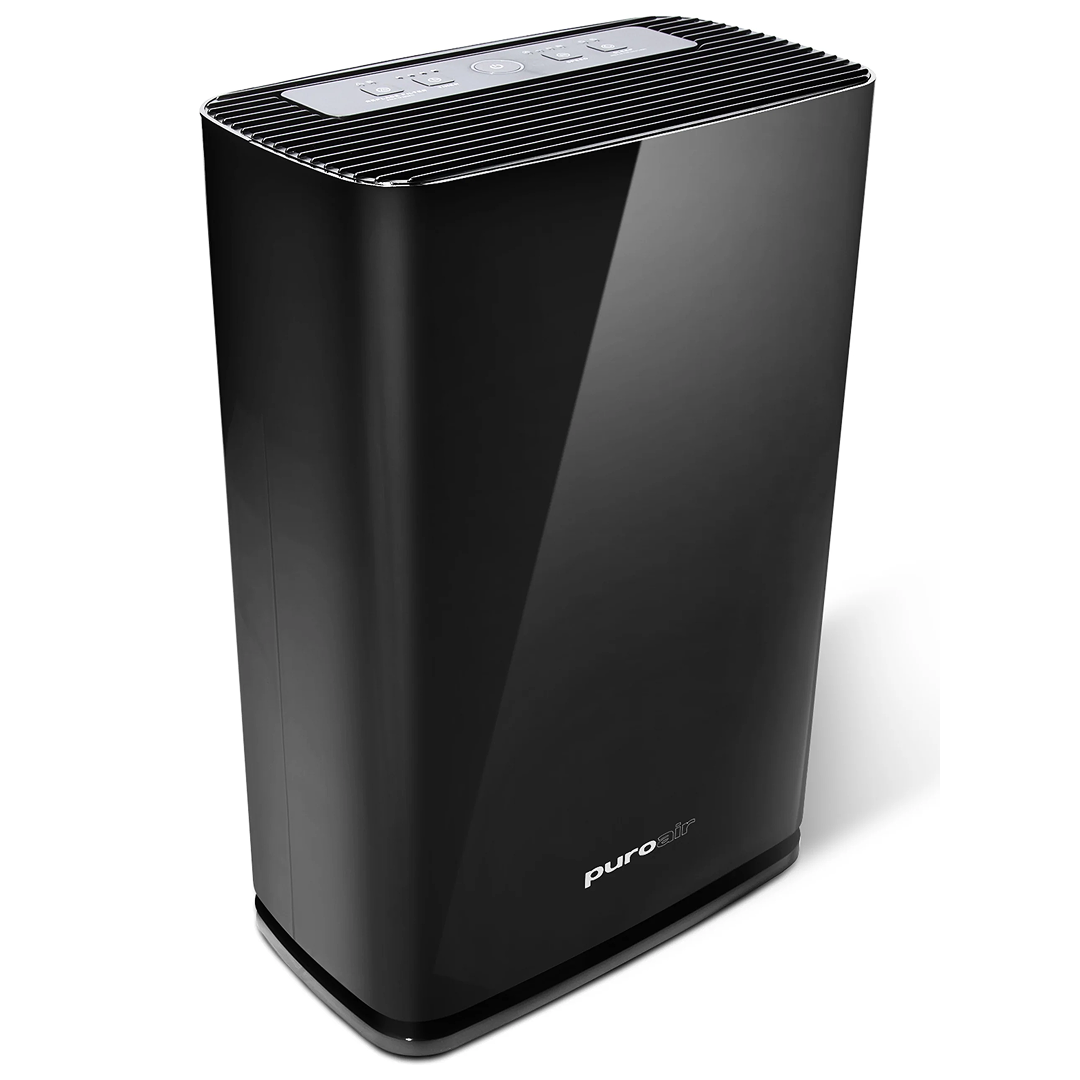
PuroAir 400 — HEPA 14 Air Purifier
- Covers large rooms up to 2,145 sq ft
- World’s first HEPA 14 filter — removes 99.995% of particles
- Auto air quality sensor · whisper-quiet · free shipping
- 100-day money-back guarantee · trusted by 900,000+ customers
We may earn a small commission if you buy through this link — at no extra cost to you.
How Fans Actually Reduce Humidity Through Air Movement
Fans reduce humidity primarily by accelerating evaporation and preventing moisture from accumulating in stagnant air pockets. When air moves across wet surfaces — whether that’s a damp towel, condensation on windows, or moisture on your skin — it carries away water vapor more efficiently than still air. Moving air can hold more moisture before reaching saturation, which means your 65% relative humidity might drop to 58% simply because the air is circulating. The key mechanism here isn’t removing water from your space, but redistributing it and helping it evaporate faster from surfaces where it tends to pool.
This process becomes especially effective when you combine air movement with temperature differences. A ceiling fan pulling warm, moist air upward creates a convection current that naturally moves humid air toward cooler surfaces like exterior walls or windows, where some moisture condenses and can be wiped away rather than staying airborne. Most people don’t think about this until they notice how much less “sticky” a room feels with a fan running, even when the actual humidity hasn’t dropped dramatically on their hygrometer.

PuroAir 240 — HEPA Air Purifier
- Ideal for bedrooms and rooms up to 240 sq ft
- Captures 99.9% of airborne pollutants including mold spores
- Whisper-quiet sleep mode — won’t disturb your rest
- 100-day money-back guarantee · trusted by 900,000+ customers
We may earn a small commission if you buy through this link — at no extra cost to you.
Strategic Fan Placement for Maximum Humidity Reduction
The placement of your fans makes a huge difference in how effectively they reduce humidity. Positioning fans to create cross-ventilation — where one fan pulls humid air out while another brings drier air in — can reduce indoor humidity by 8-15% within 2-3 hours. This works best when you have a humidity gradient, such as when outdoor air is less humid than indoor air, which commonly happens during late evening or early morning hours even in summer.
Here’s the strategic approach that actually works:
- Place exhaust fans in the most humid rooms (bathroom, kitchen, laundry area) to pull moisture out at the source
- Position intake fans near windows or doors in drier areas to bring in less humid outside air when conditions allow
- Use ceiling fans in bedrooms and living areas to prevent moisture from settling in corners and behind furniture
- Install small circulation fans in closets or storage areas where air doesn’t naturally move
- Point tower fans toward problem areas like windows with condensation or walls that feel damp
Different Fan Types and Their Humidity-Fighting Abilities
Not all fans are created equal when it comes to reducing humidity. Exhaust fans are the heavy hitters, actually removing moisture-laden air from your space at rates of 50-110 cubic feet per minute depending on the model. Ceiling fans work more subtly, improving evaporation rates across large areas but only reducing humidity by 3-7% in most rooms. Window fans can be game-changers during the right conditions, potentially dropping humidity by 10-20% when outdoor air is significantly drier than indoor air.
Here’s how different fan types stack up for humidity control:
| Fan Type | Humidity Reduction | Best Use Case | Energy Cost |
|---|---|---|---|
| Exhaust Fans | 15-25% | Bathrooms, kitchens | $15-25/year |
| Window Fans | 10-20% | When outdoor air is drier | $20-35/year |
| Ceiling Fans | 3-7% | Large rooms, bedrooms | $10-18/year |
| Tower/Desk Fans | 2-5% | Targeted air movement | $8-15/year |

PuroAir HVAC Mega Filter — MERV 13
- Captures dust mites, mold spores and allergens
- MERV 13 + activated carbon — dual filtration
- Designed for optimal airflow · fits any HVAC system
- Free shipping always · easy DIY installation
We may earn a small commission if you buy through this link — at no extra cost to you.
When Fans Work Best vs. When They’re Limited
Fans reduce humidity most effectively when outdoor humidity is below 50% and indoor humidity exceeds 55%. During these conditions, which often occur during spring and fall months, strategic fan use can maintain comfortable humidity levels without running a dehumidifier. However, fans hit their limits when outdoor humidity matches or exceeds indoor levels — you can’t fight 80% outdoor humidity with air circulation alone. The physics just doesn’t work that way.
Fans also struggle in these specific situations:
- When humidity sources are actively producing moisture faster than air movement can distribute it
- In spaces with poor insulation where condensation forms faster than evaporation occurs
- During humid weather when outdoor air contains more moisture than indoor air
- In basements or below-grade rooms where cool surfaces promote condensation
- When relative humidity consistently exceeds 70%, requiring mechanical dehumidification
Pro-Tip: Run fans for 30-45 minutes after activities that generate moisture (cooking, showering, doing laundry) rather than leaving them on constantly. This targeted approach removes humid air when it’s most concentrated, making fan operation much more effective.
PuroAir 240
HEPA Air Purifier
Best for
Bedrooms, nurseries, small offices
PuroAir 400
HEPA 14 Air Purifier
Best for
Living rooms, mold & allergy sufferers
We may earn a small commission if you buy through these links — at no extra cost to you.
Combining Fans with Other Humidity Control Methods
Fans work best as part of a humidity management system rather than a standalone solution. Combining a small 30-pint dehumidifier with strategic fan placement can maintain ideal humidity levels (40-50%) while using 40-60% less energy than running a larger dehumidifier alone. The fans help distribute the drier air throughout your space and assist the dehumidifier by improving air circulation around its intake and exhaust.
“Most people underestimate how much fans can extend the effective range of a dehumidifier. A properly positioned circulation fan can help a 30-pint unit perform like a 50-pint unit in terms of coverage area.”
Dr. Michael Torres, Building Science Engineer
The combination approach works because fans address humidity through air movement while other methods tackle the root causes. Opening windows during low-humidity periods while running intake fans maximizes the exchange of moist indoor air with drier outdoor air. Using moisture-absorbing materials like activated charcoal or silica gel in small spaces while circulating air with fans speeds up the moisture absorption process. Even simple changes like running your bathroom exhaust fan for 20 minutes after showering while using a small circulation fan in the hallway can prevent humid air from spreading throughout your apartment.
Fans reduce humidity through air movement, evaporation enhancement, and moisture distribution rather than active water removal. While they can’t solve serious humidity problems on their own, they’re surprisingly effective at preventing moisture buildup and maintaining comfortable conditions when used strategically. Start by identifying your most humid areas and installing appropriate fans to create airflow patterns that work with your space’s natural air circulation. You’ll likely find that this simple, energy-efficient approach handles more of your humidity concerns than you expected.
Frequently Asked Questions
Do fans actually reduce humidity or just make you feel cooler?
Fans don’t actually remove moisture from the air, so they won’t reduce your home’s humidity levels. They create air circulation that helps sweat evaporate faster from your skin, making you feel cooler and less sticky. If your humidity is above 60%, you’ll still need a dehumidifier to actually lower those levels.
Can ceiling fans help with humidity problems?
Ceiling fans can help distribute air and prevent moisture from settling in one area, but they won’t solve humidity problems. They’re great for moving humid air around and preventing condensation on surfaces like windows. For humidity above 50-55%, you’ll need proper ventilation or a dehumidifier alongside your ceiling fan.
What’s the difference between a fan and a dehumidifier for humidity?
A dehumidifier actually pulls moisture out of the air and collects it in a tank, while fans just move the humid air around. Dehumidifiers can drop humidity from 70% down to 40-50%, but fans only provide comfort through air movement. If you’ve got a real humidity problem, you need a dehumidifier.
Do bathroom exhaust fans reduce humidity?
Yes, bathroom exhaust fans do reduce humidity by pulling moist air out of the room and venting it outside. They’re most effective when you run them during and for 30 minutes after showers. A good exhaust fan can remove several gallons of moisture per day from your bathroom.
Can fans make humidity worse in some situations?
Fans can make humidity feel worse if they’re just circulating already humid air without proper ventilation. In basements or poorly ventilated areas, fans might stir up moisture that’s settled and make the air feel more oppressive. You need fresh air exchange, not just air movement, to tackle humidity issues.